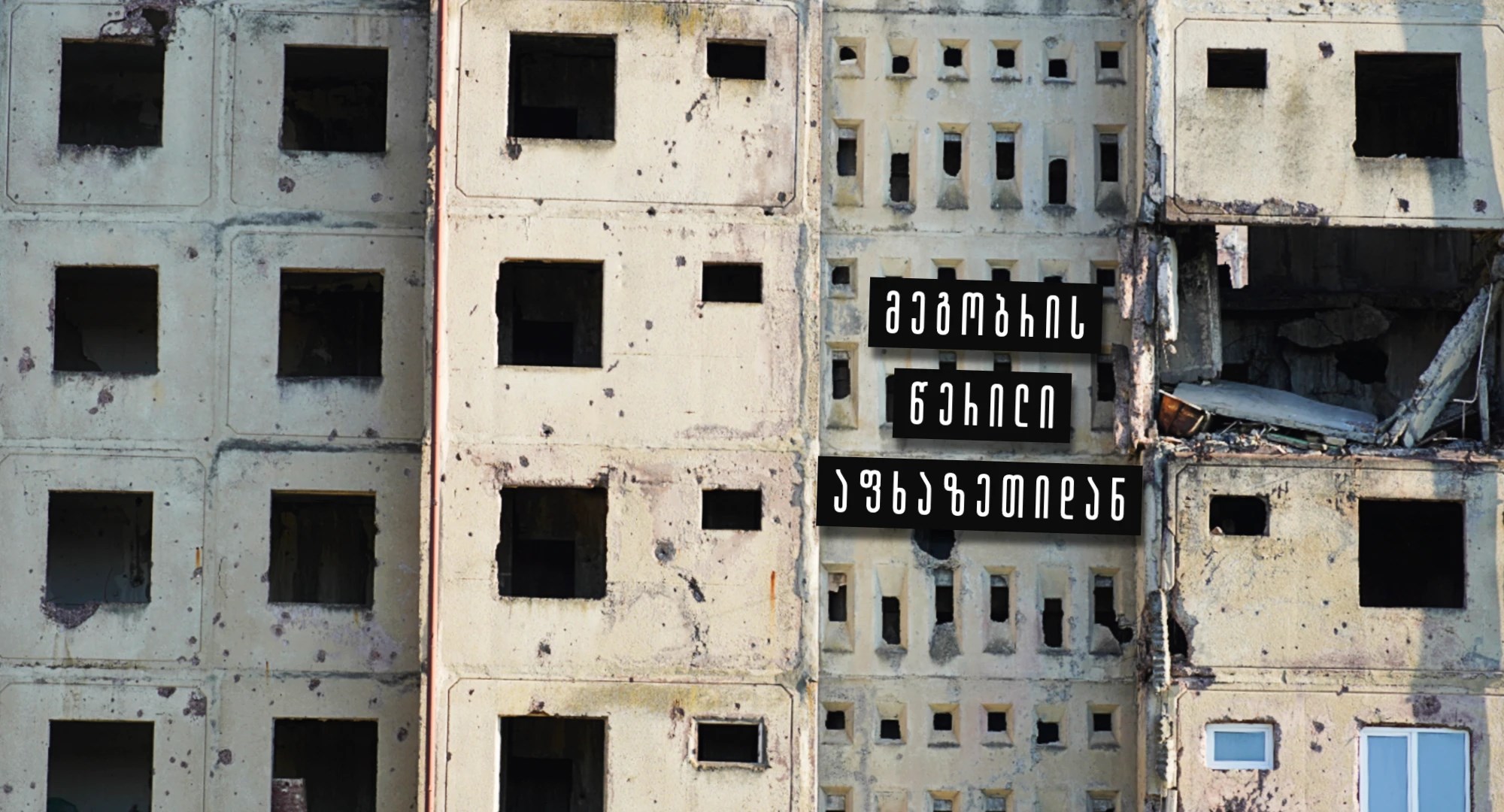


A Letter from a friend from Abkhazia
Salina Abaza, artist born in syria to an Abkhaz father and Circassian mother from the Mukhajirs community of genocide survivors and displaced people from south west Caucasus, currently back in Abkhazia for the past six years.
...
December, 2025
Dearest Nino,
It has been a long time since we last talked, almost a year. It feels far longer than that, but everything has been moving unfathomably fast, this year felt like an eternity.
In December 2024, Assad fled Syria. Can you imagine? The intensity of that week is still vivid in my mind, following the news frantically, messaging friends I haven’t talked to in years, a lot of crying for friends I lost or friends that are missing along with more than 177,000 missing Syrians. A lot of reflection, a lot of self-forgiveness and a momentary conviction that everything will be fine, that to be fine is actually possible; good endings are possible, the chants of “the people want to topple the regime" from 14 years ago and the fulfillment of people’s will now are possible… In short I went through an overwhelming sensation of euphoria, an unstoppable tide of high emotions.
It took less than three months for everything to go in the opposite direction. Assad left with his entourage and entire fortune, but he only left after creating an unimaginable legacy of death, destruction and intervention not only on the scale of the country’s geography but in Syrian society. He left but the regime didn’t change, that regime of lawlessness, corruption, brutality still exists very visibly, minus the air raids and bombing and mass detentions. No justice for victims, no steps towards a democratic transformation, no accountability whatsoever. Just a replacement of a corrupt echelon of business and authority. Maybe the revolution didn’t win after all… maybe it was hijacked, repackaged, and resold. Now, the reality is massacres, the dissimilation of a country, an increasingly violent ethnic and sectarian conflict...
It’s paralyzing to look back now and see how what I felt was the most noble and important thing that happened in my life - the revolution, so defeated, broken and so dispossessed from its own meaning. Even though removing Assad was a miracle, and even if it created a margin for freedom people never experienced in Syria, it also created a power vacuum now filled with violent chaos.
Since then it’s been a prolonged period of disillusion for me, something like staring into a broken mirror. In a way, it was a continuation of the disillusion of the year before as we watched a genocide in Palestine in real time and watched the civilized world either incapable of stopping it or directly funding it. I grew more pessimistic in the world as it imploded from within, cautiously hopeful of a future far into the distance, but deeply aware of the dangers of such a transformation.
Every morning I start the day with coffee and news, it seems like a state of “hypernormalisation” on a global scale; geopolitics, economies, climate, democracies, authoritarianism, corporations, AI.. Everyone is sensing the danger of accepting reality as it is, but I guess we need the poets and artists of the world to imagine the alternative reality.
My aspirations and dreams are also fragmented, smaller and tighter – as if the only things I wish for is to survive the year, to survive the month, to survive the day, and then to enjoy the moment because the next moment I might not have the will and energy for it. It’s a very pessimistic perspective, how powerless we are in the making of real change, like sitting on a train and knowing it’s heading towards a terrifying end and not being able to do anything about it. Though a very pessimistic perspective, I find it also poetic; as I temporarily lose hope in revolutionary change, I slow down and look inwards, enjoy my little victories, little things that reflect life and its beauty, the very things that keep the artist in me alive, watching the slow decay but noticing life accumulating beneath its surface.
And there’s no better place for me to slow down and look inwards but Abkhazia.
From my window, another reality is vibrant but calm. Slow but visible; my green and grey district, the school facing my building, and the mountains and sea stretching in the distance. Over the years the school became busier and louder. The children’s screams and loud sports classes in the backyard, annoying sometimes but so lively and vital. In that backyard, there stood rusty rods and iron formations of what used to be a playground of some sort, abandoned, completely overgrown with grass and time. Today next to that rust stands a spacious basketball court and a yard with brand new sports equipment, an open air gym for the neighborhood. And indeed, there are always kids playing during the day now, and adults training at night. There are old couples, a group of mothers using the machines while socializing on the side, young boys trying out equipment, a shy young couple, a young man dancing Abkhazian alone to music only he hears, so many kids.. Really everyone, even the neighborhood dogs enjoyed it because it gave them a sense of protection and a new territory to claim and now they hang out at the gates of the yard constantly.
This came after the paving of roads in the area. Some streets that were untouched since I moved into my flat in 2020 with large holes in the asphalt, overgrown and decayed with the winter filling them in water and mud, are now paved for the first time. Right after the works were finished, pedestrians hurriedly took over the street: women strolling with carriages, children with bikes and skates, a very new atmosphere for a back street everyone avoided.
Earlier in the year, some buildings in the district were repaired and painted with graffiti, one of them is a school where children were greeted by bullet holes on the walls every morning, untouched since the war and now repainted with beautiful images of poets and alphabet letters in vibrant colors.
These initiatives were done in different programs of development and cooperation with Russia, like the twin city programs between Sukhum and Nezhny Novgorod. It seemed to me that after the controversy of the investment law last year, Russia is maybe trying another approach to pave the way by actually paving roads rather than pushing controversial laws from top to bottom.. It’s a tricky road I think, but a world that isolated Abkhazia that hard is the same world that pushed it deeper into the “Russian world”. In any case, I have faith in the people's awareness about it and their firm belief in their freedom and readiness to defend it. People here don’t hate Russia, they respect it because it was the only “world” that accepted them, but what they respect more is particularly this freedom.
I first visited Abkhazia as an adult in 2012 to see my family right after I left Syria and right before I plunged into a long period of immigration and displacement. Once I crossed the border, I was mortified. Things felt like walking into a decaying time capsule, you could almost still smell and taste the war in the heavy dampness of the air, so many women were still wearing black, the traces of bullets were everywhere, next to them were plaques of names here, and here, and here, and there. And abandoned places in every direction, a painful reminder of the family home I left behind in Damascus. The country looked old, tired, deprived and forsaken. Roads, hospitals and schools were in terrible shape. Everywhere I looked there was only rust and poverty. I only stayed for a short period and took off to Dubai, but my heart was crushed knowing my aging parents were going to need medical care they might not find. It was a very quick impression but it was devastating.
Years later I came back, didn’t know I was going to settle, but here I am six years later. This time around I had more time to examine everything. The country still looked haunted by memories no one is willing to let go of, debts no one was able to pay, and an isolation no one is able to break free from. Many spaces were still abandoned, some with explosive shell traces all over, it still felt deprived and forsaken, but now I had the time to look beneath the surface and to interact. I was a Stalker trying to understand the Zone.
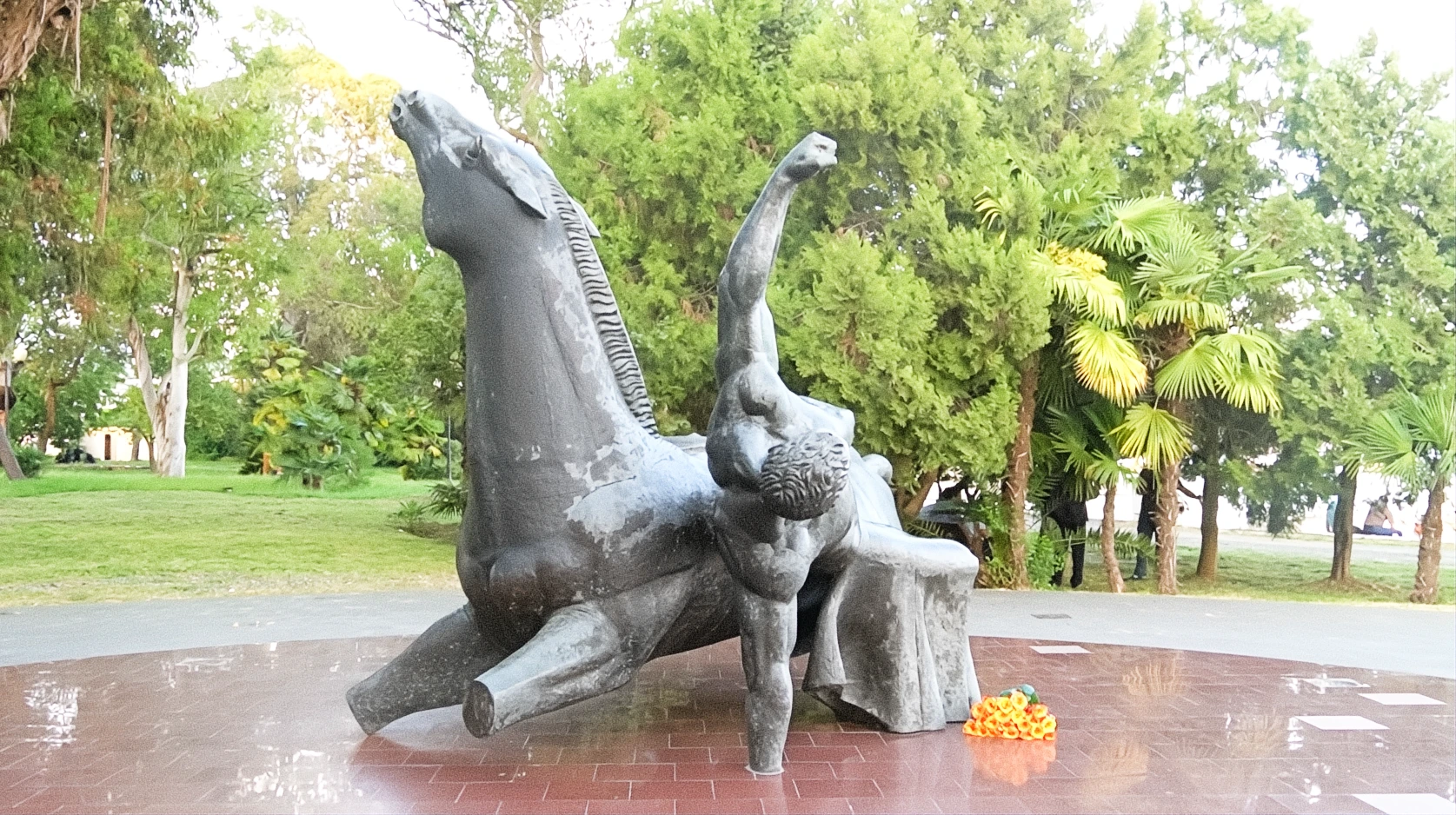
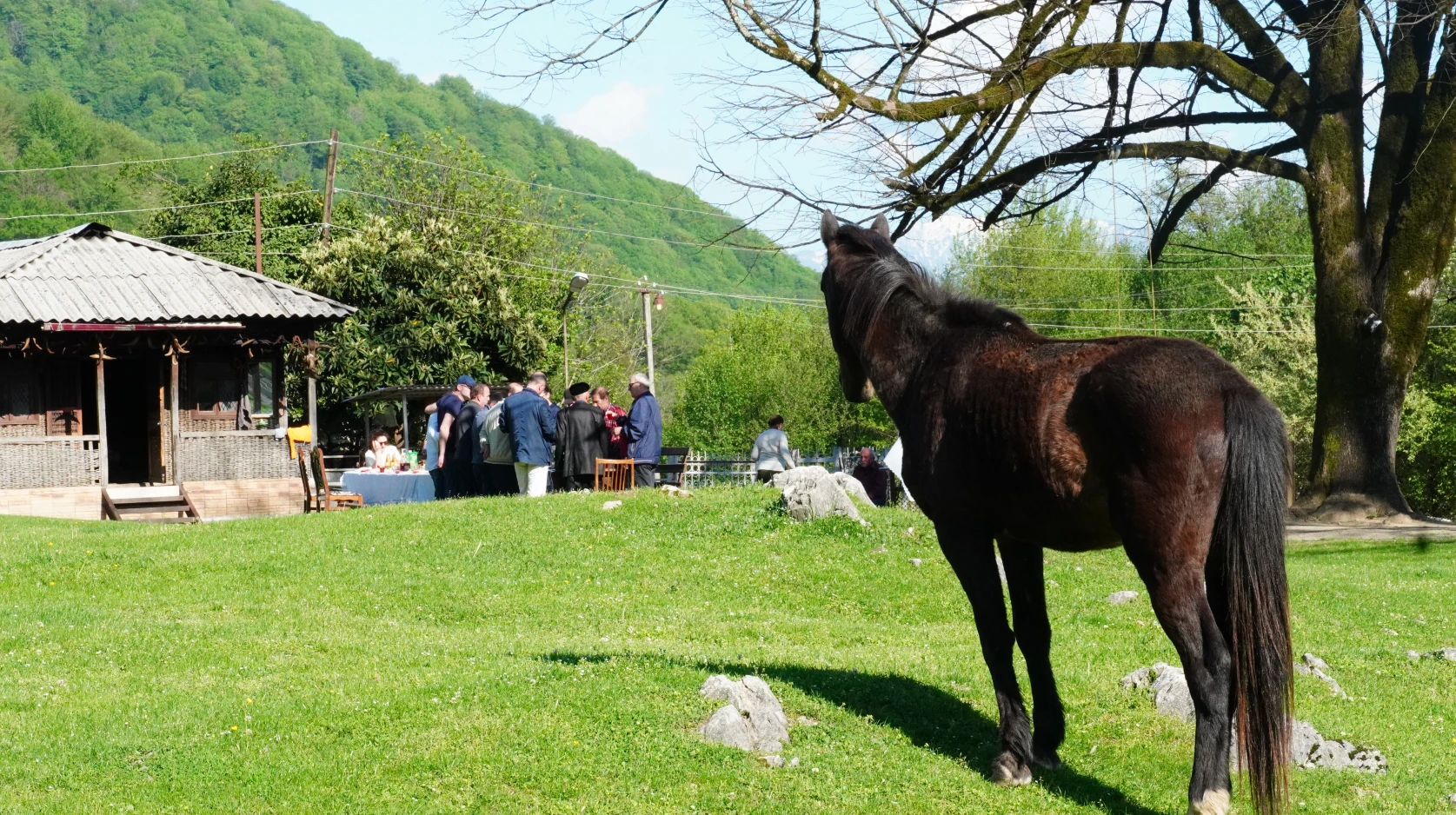
Time here moved slower, and it forced me to slow down and pause, with open arms I was introduced to the details. Details that instantly clicked with me, now I don’t only see the destruction, I also see pieces of myself, everything my father told me about as a child: the bedtime story of Abryskel echoed with an engraving of him and his chains on a random wall in Novi Afon, the story of the mother who sang to her dead child so the sailors on the ship won’t throw him into the depths of the Black Sea, echoed with the statue in the heart of Sukhum of a man falling from the back of a dismembered horse, and while falling, he had one arm pointing to the sky while the other planted into the land with a plaque that read something like “this statue is to commemorate the Abkhazians who were forced into displacement,” that plaque was staring right into my soul. Even the village and the family name and traditions my father told me we belonged to were indeed in Tsbal, there I met members of the family from Turkey and Syria and Abkhazia (I’m told some are also in Georgia) celebrating a holiday and holding a ritual for prosperity and good deeds. What I genuinely thought as a child in Syria was my father’s illusions of a distant long lost homeland, was real. I felt the same in Maykop, Adigey. The wedding songs we also grew up listening and dancing to in Syria echoed in weddings around the city, my mother’s language which she tried so hard to teach me was written on signs and banners and people spoke it everywhere, the Shalama and Haliva she made us in Syria, you could eat it in restaurants here! All that knowledge and culture my parents passed to me and then me “reverse immigrating” felt like a victory against destiny, against genocide and 150 years of displacement.
Even as I noticed the destruction and deprivation in Abkhazia, I had the time to notice everything else, not only how I belonged, but how beautiful things were under the decaying surfaces. I noticed nature for the first time after living in busy cities pretty much most of my life. Trees here are like familiar faces you acquaint while walking in your neighborhood or the city center. In my district, even animals are familiar to the residents of the area, you have the dogs and cats of course, but you also have the horses that visit sometimes coming from the outskirts, and some cows here and there. There’s some kind of understanding between the town and these animals; a Porsche Cayenne slowing down by a group of horses, a woman passing by holding a bag, a cat rushing in the other direction. The normality of life.
This is not to say that everything is perfect. The reality of the forceful political isolation of Abkhazia also had its devastating effects. Apart from the economy, infrastructure and a deteriorating health sector (that still managed to save lives -almost for free- by the miracles of committed crews of doctors and nurses), there is the forced distancing from a very connected modern world, a world that is constantly telling you online, in political discussions and in international platforms that you don’t exist. You want to apply to something? Well, good luck being able to locate yourself in the application. Do you want to get paid for work you’ve completed? Good luck doing that without having to jump endless hurdles. Do you want to order something online? Well, the Russian online market is your only option, and after you do that, good luck getting it delivered in time to Abkhazia. All these things created a stagnant reality in a sealed bubble where life standards are drastically pushed lower. To me personally, it was hard to continue my work or find new opportunities considering that I am a freelancer with international clients, and it definitely became harder in the past two years, until it completely halted this past year. I haven’t been able to formulate an active social life like the ones I created in cities I lived in, mainly because I couldn’t learn the language, and even though I was so warmly welcomed as a Syrian repatriant, and even though I became part of a growing art scene, but there’s a limit to the growth you can cultivate under this severe reality of isolation and unrecognition. Not only financially, but also creatively.
But even in a stagnant pond, there’s always a vital ecosystem, a universe of its own. No matter how hard and slow growth was, it actually never completely stopped. The teenagers and kids I saw in my first visit in 2012 are now the young men and women of the country. They have a voice, and their voice is heard, so they speak up. Even with this unfathomably hard reality, they instigated the political discussions on sovereignty of land outside news chatrooms and online discourse, they brought it to the street, and most of the society backed them. In one instance when some of them were arrested for placing different banners in the city with quotes about sovereignty from Abkhazian leaders and poets, a massive group of people stood by the police station until they were released. They pushed back against the "foreign agents law” and stood firm against the controversial investment laws with genuine concern about sovereignty and the demographic reality. I saw them march to the presidential palace joining the rest of their people, men, women, young, old, really everyone was there. A president was impeached for corruption and questionable connections, and a new one elected, all done peacefully and in a democratic framework. Does this solve all the problems of Abkhazia? Isolation, corruption, the broken economy? Of course not, but seeing a constant active discussion on political updates involving young men and women and seeing the respect for the democratic process is always a good sign, it’s a sign of vitality. In a way, perhaps revolution and change was never meant to be an end goal but rather a continuous and active process. The same way a new park or a paved road will increase the living standard a little bit, but is not going to solve all these problems. What matters is that this political discussion continues along with the deep faith in the freedom of having it.
Will Abkhazia be able to sustain that freedom? I hope so. We live in a world of empires and modern colonization. A world where places like Syria or Abkhazia are the playground of a larger whole. A world that increasingly seems to stand on the brink of an apocalyptic discourse that will redefine borders and identities and meaning altogether.
In such a world, I chose to focus on the small details; appreciate and feel the joy of an elderly woman who is finally strolling with a walker on the streets of her neighborhood, an old couple training in an open space or the sight of a plane crossing the sky towards the airport.
Well.. It turns out after all, to my father it was never an imaginary place. He always talked about it, he was the reason I know the war as it was happening and the severe blockade that followed. He dreamt of “going back”, and he tried before the war. Here he is, sitting while I shave his beard as he stares indefinitely into the mountains and the stretching sea in the distance. I think he is the reason I am still here, the father and the land. Even in my darkest hours, when I stood on the edge and almost jumped into seeking asylum like all my friends from Syria, I couldn’t take the decision, I was haunted by his face, I couldn’t chose being deprived of the simple right of seeing him and my aging mother, I couldn’t throw myself into a reality where I will not be called a “repatriant” but recycle in news as a “burden” depending on political landscapes, won’t be able to simply decide to visit my family a walk away from me, or go with my brothers to the beach and barbeque. I won’t be able to take my time and notice life. That’s a very big price to pay. I still struggle with reality of course, my career and a stable income, the near impossibility of travel and the access to an active social and artistic community, but I am still trying to build a reality where I can be rooted in Abkhazia just like that arm of the statue on the embankment while I still have access to work and community outside. In an increasingly bordered world this will only become harder unfortunately.
…
I solace myself by thinking, perhaps Isolation doesn’t mean loneliness. In isolation, one can find solitude, time and space suitable for reflection. From an Arendt-ian point of view, it's about being alone rather than lonely. In loneliness, there’s loss of meaning, but in aloneness there’s search for it.
Here, I often find myself immersed in my environment while walking around, and nature here is very wild and immersive in that sense, you start to develop a level of appreciation and gratitude for life, for the sun, for the trees, for the animals, the noisy students outside my window away from the chaos of the breaking news from the world outside.