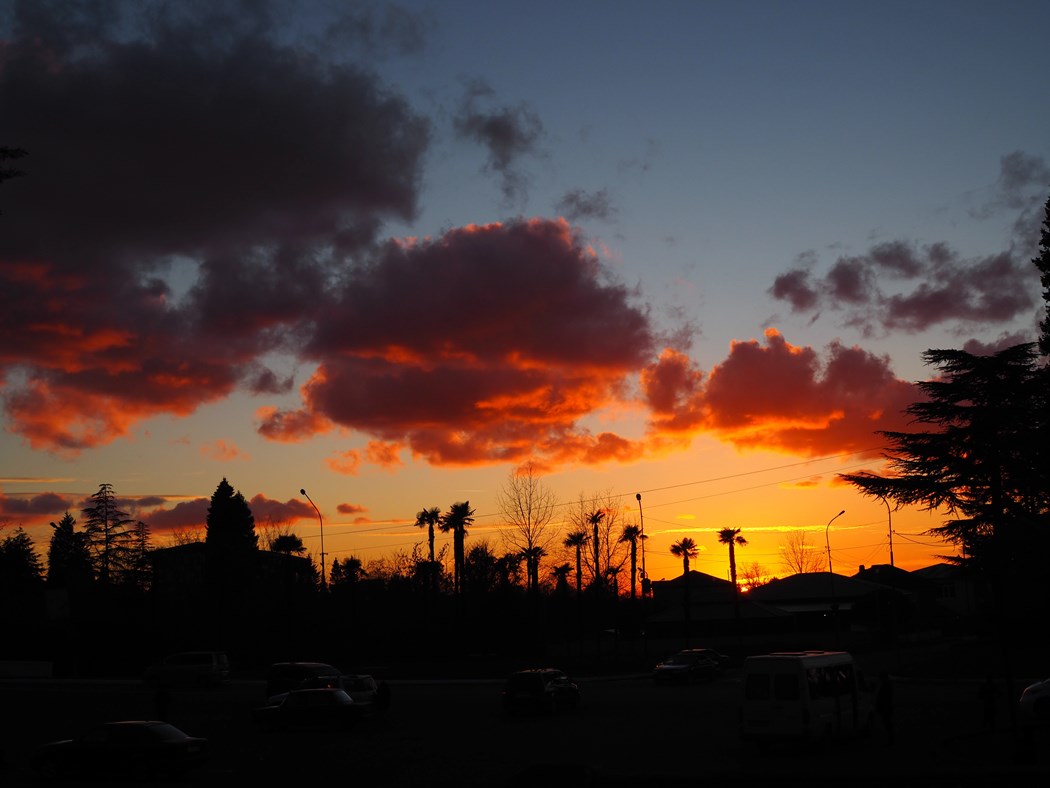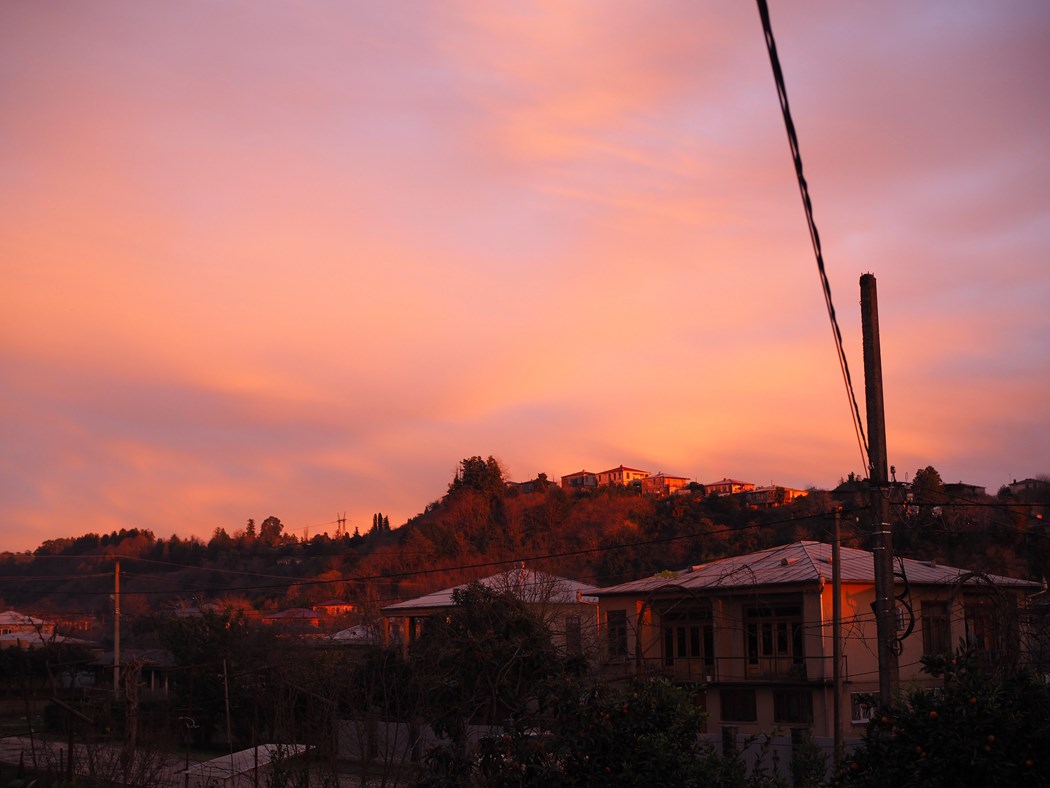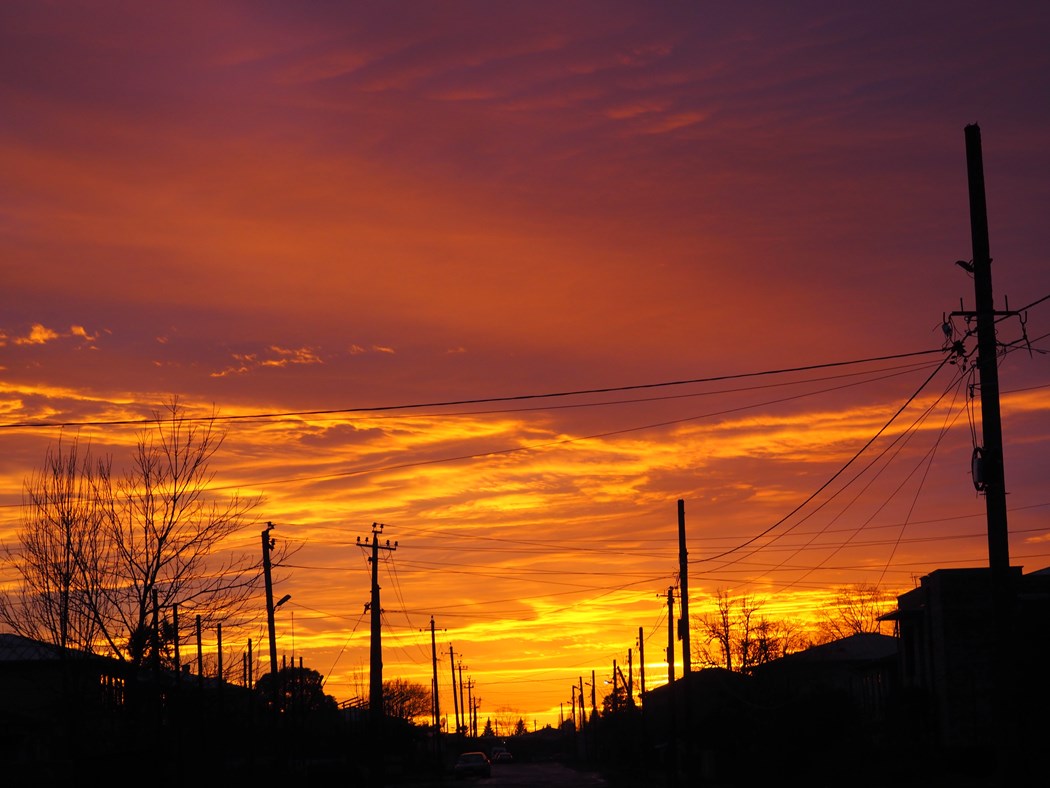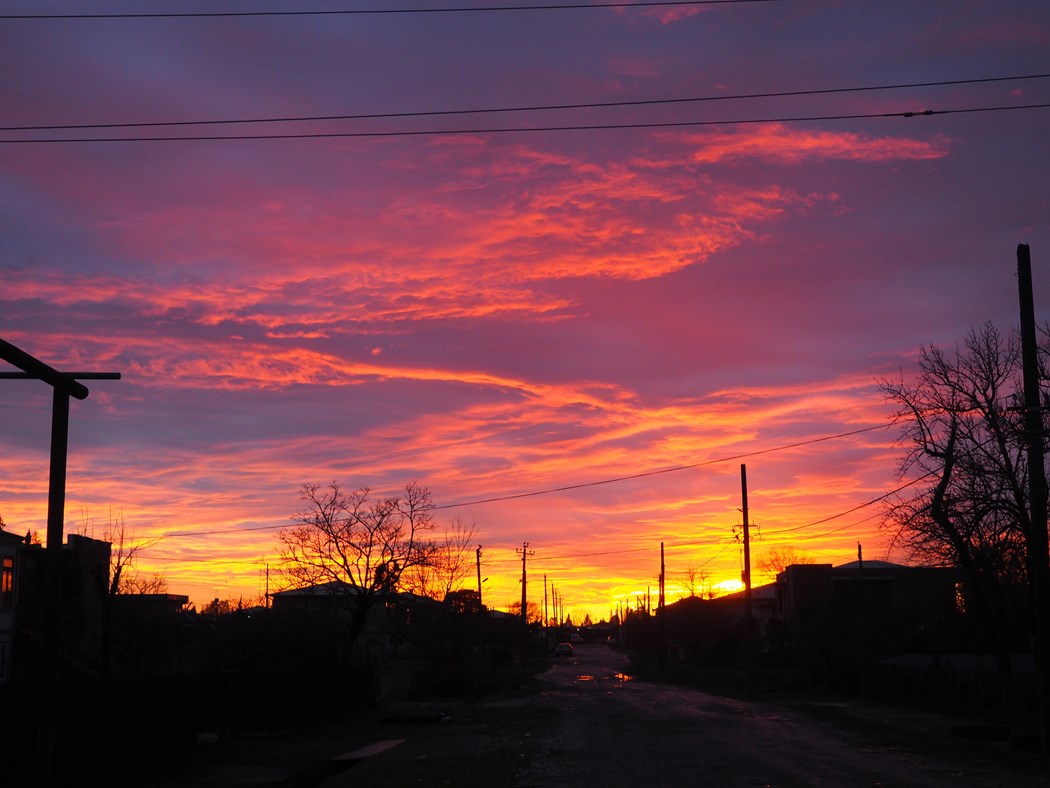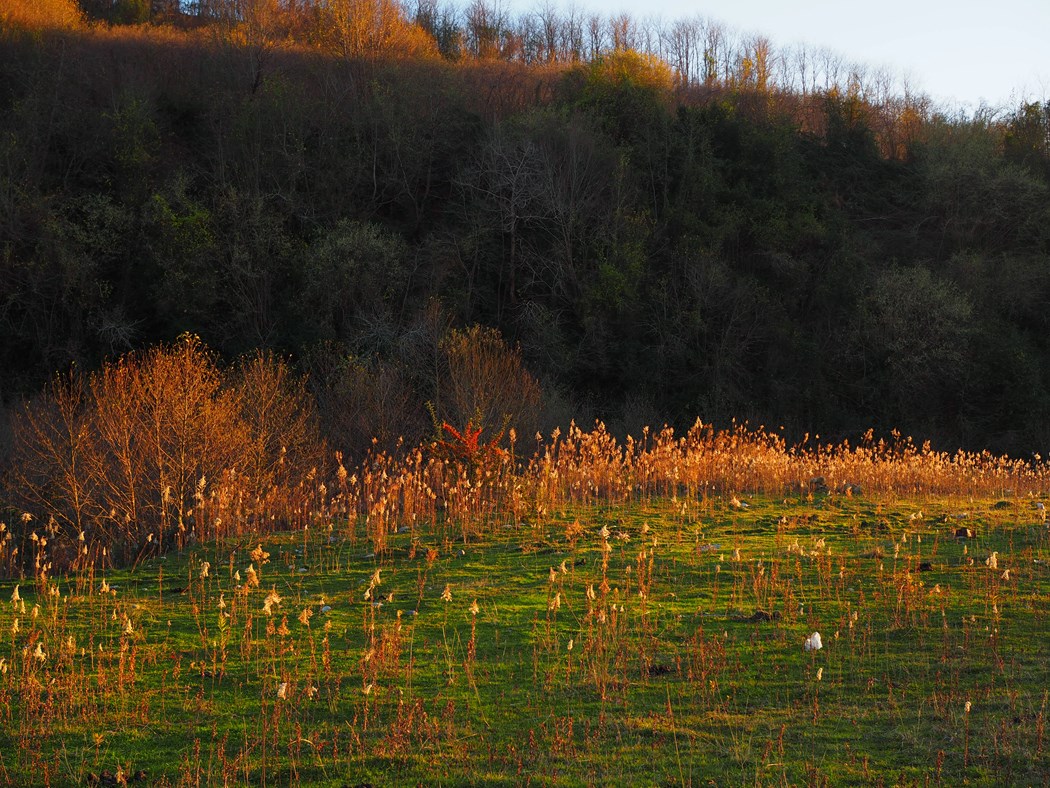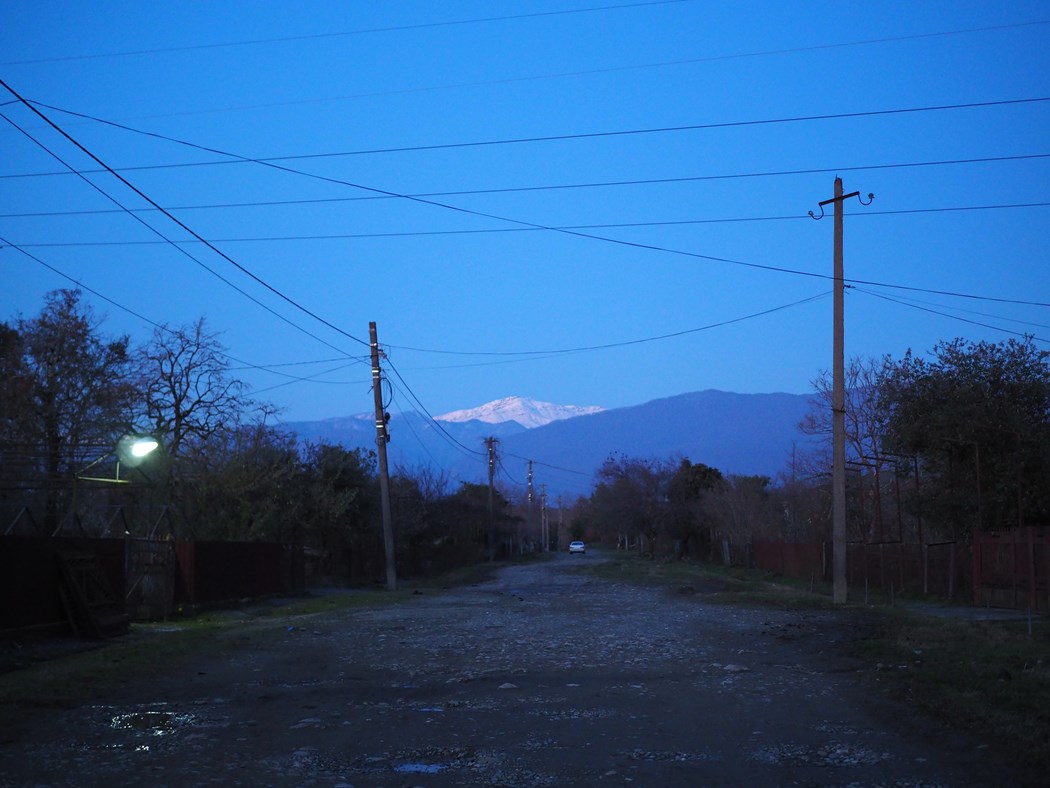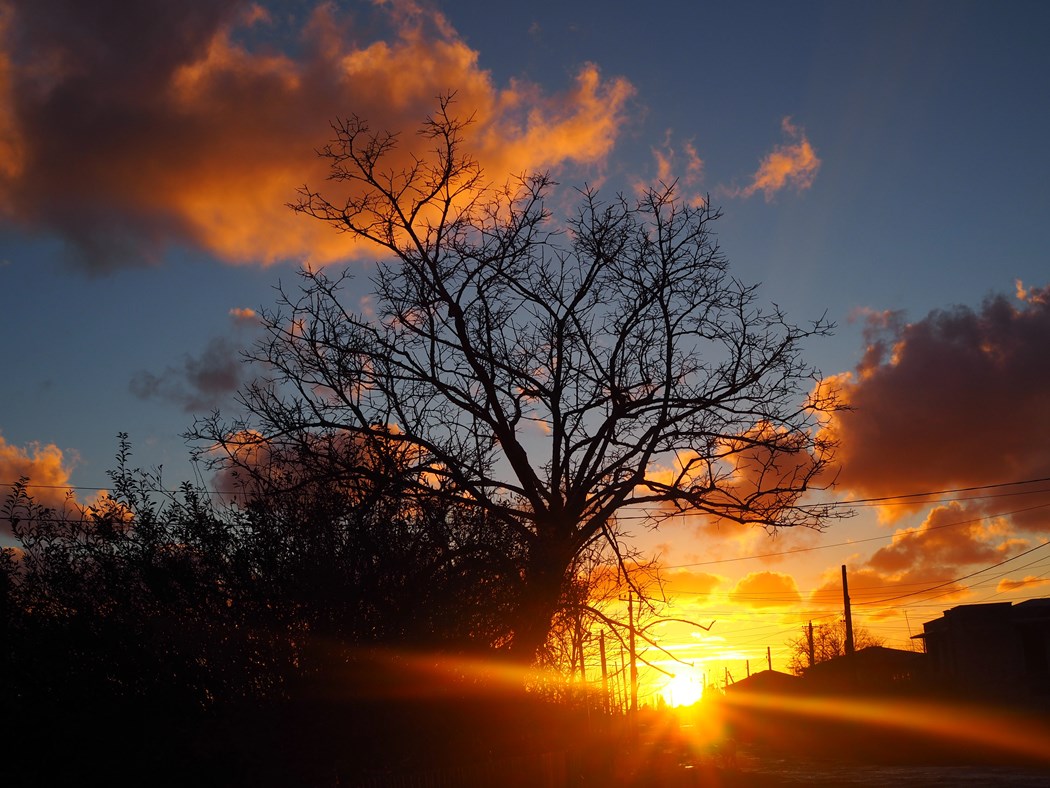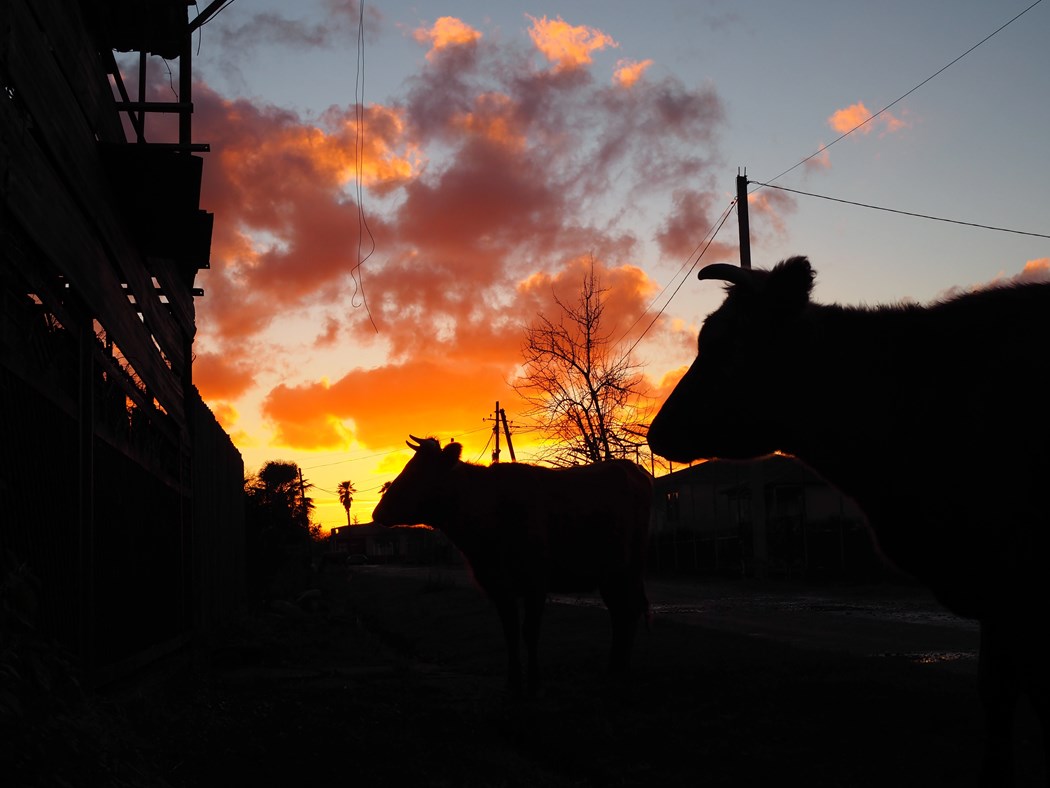


Crossing the border, sunset
06.05.2026 | 8 Min to readIt is May 2021, and I am in Batumi with some friends. In a few days, we are planning to go hiking in Upper Adjara. Then my mother calls me from Gali to tell me that my Abkhazia residence permit is ready. I had been waiting for that document for so long… since 2017. I immediately tell my friends, “I’m not coming hiking with you anymore.” I decide to go to Abkhazia right away—straight from Batumi, the very next day.
We drank a lot that night. My friends, along with every member of the family we were staying with, wished me a safe journey to Abkhazia. They knew I was going to sneak across. Early the next morning, we all went swimming in the sea. I floated on the water, imagining that I was already in Abkhazia.
I quickly dried my hair and headed out onto the road to hitchhike. First, I made it to Poti. There, I got into another car, and we headed toward Samegrelo. I noticed that the man behind the wheel was missing a leg. He introduced himself.
A longer pause.
Every time I say I’m from Abkhazia, people can’t hide their surprise. Sometimes, it’s almost comical. Once they’ve processed the fact, a barrage of questions follows, and then comes more surprise, more disbelief.
I still didn’t dare tell him that I was planning to sneak across. For my little unconventional adventure, I needed to get as far as the village of Khurcha. It turned out that Irakli was heading to a village next to Khurcha for the first time. “Well then, I’ll take you all the way there.” On the way, he told me stories about the wars in Abkhazia, Ossetia, and Iraq. Meanwhile, I was texting my friend: “He’s a good guy, but he talks about war all the time. You’d like him.”
After two cups of coffee and a piece of shoti bread, Irakli asked me:
He slammed on the brakes. We nearly went flying.
– You do know that I’ve taken an oath and that I don’t recognize the occupied territories? What do you mean, you have to sneak across?
He couldn’t believe that this was what life was like along the occupation line. Did people really have to sneak across just to get home? Of everything that was happening in Gali, the only thing he knew was that children were no longer taught in Georgian at school.
I went red. “Please stop the car,” I finally said. I apologized, thanked him, and said goodbye. He stopped the car, but wouldn’t let me out. “Give me a minute,” he said, breathing heavily. Then he apologized to me. I understood it as the apology of a soldier whose sense of honor had been wounded: “I’m sorry you have to do this.”
– All right. I’ll take you to the occupation line, but promise me nothing will happen to you.
– Oh, come on, Mr. Irakli! I laughed. – Do you know how many times I’ve swum across the Enguri? But this time I don’t have to swim. I just have to climb over the barbed wire.
I tried to make a joke, but it didn’t work. Irakli started the car.
After that, I did most of the talking. He couldn’t hide his anger that I had to sneak across just to get home. He would swear, then apologize to me, and I would explain that it was okay; at least I still had a home, while some people didn’t even have one. He would look at me with pity and sigh.
He also banned me from using the word “border.” He would repeat it syllable by syllable: “Oc-cu-pa-tion line!” I stubbornly told him, “Mr. Irakli, if you had to climb over barbed wire or swim across a river to get home, I’m pretty sure you wouldn’t call it an occupation line. You’d call it an Iron Curtain.” Finally, I managed to make him laugh.
We reached the line itself – the bridge in the village of Khurcha, where the Georgian border police stopped us.
I had first seen this bridge as a child. Back then, my mother, father, grandmother, and I were traveling from Gali to Zugdidi. I remember looking up from the river at the rust-covered bridge. We crossed the Enguri in our cream-colored Zhiguli and headed toward Zugdidi to collect the twenty-two-lari allowance for displaced people. I remember that adventure well. It was much more fun then than it is now.
“What’s my godfather’s name? What’s my godfather’s name? What’s my godfather’s name?”
What on earth could the name of a godfather who supposedly lived in Khurcha be?
Years earlier, on that particular day when my grandmother and I had crossed from Gali to Zugdidi in our cream-colored Zhiguli, we somehow ended up having to wait in Khurcha on the way back. We passed through exactly the same stretch of road where we were standing now. The house in front of which we had sat down to rest back then turned out to belong to the Ekhvaias. They even invited us inside for coffee.
So Ekhvaia could, in fact, be the name of my supposedly Khurcha-based godfather.
They let us go. Irakli and I looked at each other, both of us with our hair standing on end. His black 1980s Golf roared away.
We stopped in the center of the village, by the little gathering spot. Irakli was still nervous, and I was still trying to calm him down.
In the village center, beside a small red kiosk, stood a huge maple tree with a wooden plank that had somehow grown organically into it, perfectly shaped for sitting. A group of middle-aged and elderly men were sitting there, playing dominoes. I asked them which way to Nabakevi.
I knew the locals would know everything: where the best place to sneak across was; whether you paid the fine for crossing illegally in cash on the spot or somewhere else; whether the Russians were monitoring the border area at that particular moment; whether I had any chance of getting away…
The old men, each with a cigarette in one hand and a domino tile in the other, all pointed left at once, toward the barbed wire.
“Once you get past that, you’re in Nabakevi.”
The thing I was supposed to get through looked like an installation. Banana and palm trees seemed to create a homely, almost welcoming atmosphere, while the barbed wire wrapped around them created a complete visual dissonance. It was a beautiful installation—a portal into Abkhazia.
— Come on, Mr. Irakli. Look how easy it is. I’ll just parkour over the barbed wire.
We almost said goodbye in tears. He stood there for a long time, watching me.
Do you know what beautiful weather it was?
Somewhere in the distance, it was raining out over the sea. The setting sun lit up the sky in shades of pink and peach against the dark gray clouds. A rainbow was glowing. Everything seemed to have a radioactive green tint.
And there I was, crawling through the barbed wire, occasionally looking up at the sky and telling myself: It’s an illusion. Don’t look. Keep going.
I tried to get through the installation with as few cuts as possible, while wondering: Did they really not get tired of putting up all this barbed wire? And what was that soldier thinking when someone told him, “Come on, Andrei, you go stretch the barbed wire along the Khurcha-Nabakevi border!”
Didn’t it prick you somewhere inside when you were driving those spikes into the ground?
The old men sitting in the shade of the maple tree were cheering me on from a distance. They shouted directions, telling me which way to turn and what to avoid.
I was probably only 50 to 100 meters from the unoccupied territory to the occupied territory. A couple of minor scratches, and I’d be through.
But instead hop! I found myself standing in front of the very person I had spent years successfully avoiding.
Somehow, I had now voluntarily turned myself in to a Russian soldier I had certainly not been looking forward to meeting.
I looked back at Irakli and the old men and suddenly saw several middle fingers raised in the air, accompanied by a few choice words. I want you to know these details because they give you a sense of just how absurdly short the distance was between the Khurcha gathering spot and the place where I was detained.
—Ой, ой. Иди-ка сюда, — the Russian soldier said, beckoning me over.
“I’m coming on my own. Don’t touch me,” I told him.
He pointed toward where I should go. He took my ID and told me I would get it back after paying the fine.
I furrowed my brow and sat down on a large rock alongside a group of middle-aged women and men who, like me, had sneaked across. Unlike me, though, they weren’t carrying backpacks. They had mattresses, bed linen, and low-rise jeans in the Paris Hilton style, which they were calmly looking over.
They had probably bought them in Lilo or Turkey. They couldn’t have brought that much merchandise through the Enguri crossing, so they had decided to try their luck through Khurcha.
They wouldn’t let any of us use the toilet.
“А принять душ тоже хотите?” one of the soldiers asked.
I wish I could get inside their heads, I thought, when one of the Russian soldiers approached me. He looked about my age. He told me to sign a piece of paper confirming that I had entered the territory of Abkhazia illegally.
Oh! There it was—the perfect excuse to scream at the top of my lungs. So I did. And they were more than happy to scream back.
The women, cursing the soldiers in Megrelian, could barely hide their astonishment.
Finally, a khaki-colored Kamaz arrived. They packed about ten of us into it, and we set off for Gali.
It was pouring. The Kamaz had a tarp stretched over the top, but rain still sprayed through. I liked the smell of the fresh May greenery mixed with the rain, but at the same time, I kept an eye on the barrel of our guard’s rifle.
The Russian soldier was sitting exactly where rainwater streamed down from the tarp like a little river. He was soaked from head to toe, gripping his rifle, sitting bolt upright and staring at one fixed point.
For a long time, I debated whether to tell him that if he didn’t move closer to us, he would catch a cold. Eventually, I worked up the courage.
“You don’t have the right to talk to me,” he replied.
I fell silent.
Meanwhile, don’t forget that my parents had no idea I had gone to Gali. Apparently, my fear of my mother and father was stronger than my fear of being caught by a Russian soldier!
They took me to the КПЗ, the detention cell, in the center of Gali. As far back as I can remember, nothing has changed in that two-story, whitewashed, typically Soviet building.
Years earlier, when I had submitted a stack of documents in that same building to get my residence permit, I had stuck a “Go Vegan” sticker on the wall by the entrance. (I’m not vegan; it was simply the sticker I happened to have with me.) Someone had torn off part of this little piece of Western propaganda. The “Go” was gone, but “Vegan” remained.
I smiled and headed upstairs, where I was supposed to pay a 3,000-ruble fine, about 90 lari, for “illegally crossing the border.”
I thought to myself: “I got this far for free, and now you think I’m going to give you that money? Not a chance!”
At the КПЗ, I was greeted by a slightly drunk policeman.
My ID didn’t come completely free, but it cost me 1,000 rubles (30 lari) and two fairly substantial lies. I took it and headed home.
I reached Gali while there was still daylight, but the cloudy weather cast a grayness over everything. It was raining again. Completely soaked, I walked slowly, taking in my city, which I hadn’t seen for two years.
Nothing had changed.
Nothing ever changes here.
The cool scent of eucalyptus hung in the air.
After 30 years of isolation, this city experienced an even more suffocating kind of isolation during the COVID-19 pandemic, from both the Abkhaz and Georgian sides. Distrust toward Georgians deepened even further. On the way, I kept thinking about how people here had survived the pandemic: with an inadequate healthcare system and minimal humanitarian assistance.
How did people survive?
The 15-minute walk from the КПЗ to my home stretched out as these thoughts kept circling in my head. I passed the city administration building, next to which there is a fountain. I had never walked past that fountain without taking a sip of water – every time, I had to drink from it. I did so again now. What had once been one of Gali’s busiest and liveliest spots, crowded with taxis and minibuses, was deserted. There was only one taxi, a white Zhiguli.
Was it really just the weather?
On the way, I asked a passerby to lend me their phone and called my mother. She went crazy with joy and fear. “Don’t tell Dad I’ve arrived,” I told her. Apparently, Dad was sitting at a dinner table when he found out that I had sneaked across. They both ran out to meet me.
As I approached the house, someone shouted “Russo turisto” from behind me. It was my father. Whenever he saw someone carrying a large bag, he would call them “Russo turisto”—a once very popular phrase from the Soviet Russian film The Diamond Arm. My parents were terrified, so I tried to calm them down. I told them I had defeated the ten-headed monster: I had called the Russian soldier “unfair” and declared that this was my homeland, not his. My father joked about how that Russian soldier would ever sleep tonight after I had hurt his feelings so badly.
Later, my father and I even rolled the dice and played backgammon at home.
The next morning, bright and sunny, we went to collect my document.
I looked at the photo and remembered that I was 12 kilos heavier in my residence permit photo, but my eyes looked more hopeful than they do today.
My mother and I walked around a lot that day, and later I wandered around on my own. I couldn’t quite figure out where I was or why this place felt so gloomy. For the first time, I felt estranged from my own home, and it was difficult to admit that to myself. So I went to the places I loved most: the music school, the house where my music teacher and my mother had grown up.
Then I started thinking about what a beautiful city Gali would become when the “good” times came. Green, with plenty of parks, and with the forest that rises on a hill in the middle of the city, where no one goes anymore. Before the war, Gali’s only hotel stood in this forest-park. Since the war, the forest and the hotel have been visited only by dogs, cows, and pigs or by men up to no good.
The forest is full of enormous evergreen conifers, magnolias, and eucalyptus trees. One of its slopes is covered entirely with citrus trees. When I was a child and even now the forest had such a bad reputation that my classmates and I dared to go there only once when we skipped school.
But in the Gali of the future, this forest will become Gali’s central park. We will plant rare and not-so-rare species of trees there. Those enormous trees, standing so lonely and proud today, will be given every condition to enjoy a safe and happy old age. We will pave the stairs leading up to the forest and fill the bullet holes with beautiful stones.
When the “good” times come, Gali will become a cultural center of Abkhazia. We will organize open-air skateboarding competitions, wine festivals, film screenings, and music events, with tickets selling out two or three months in advance. People will come from Mediterranean countries to attend them. We’ll even get letters from America:
“Greetings. Our entire team at our country’s film center would like to attend the Gali Documentary and Feature Film Festival. Would it be possible to get a small discount on the tickets? Thank you.”
And we’ll reply: “Greetings. Of course. A discount? No need. Here you go – free tickets! Cinema for everyone!”
A week later, I left for Tbilisi. At the Enguri crossing, I handed my brand-new residence permit to the person sitting inside the passport control booth. It allows me to cross this border or occupation line, if you prefer. There is a mirror fitted into the booth’s window, so from outside you can see only your own reflection, not the person checking your documents. So if you didn’t have time to look in the mirror at home, you get one or two minutes at the crossing to take a good, thorough look at your own face.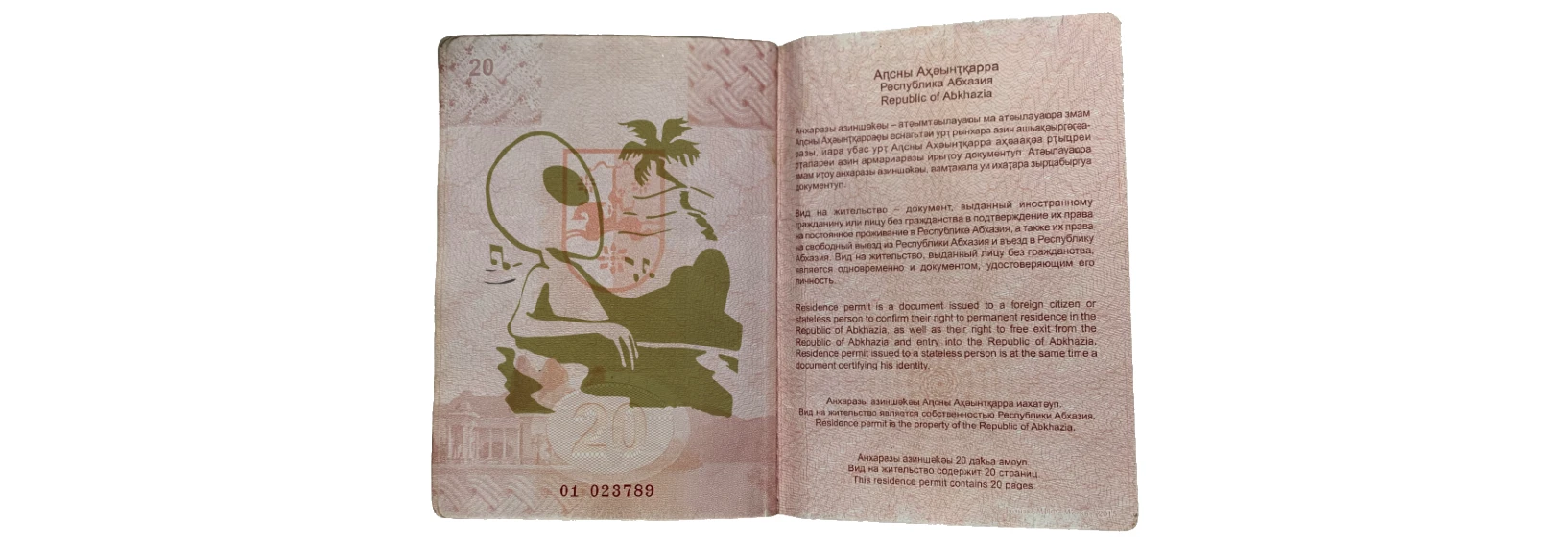
Illustration by Nita Gogrichiani
The usual dialogue took place with the anonymous person checking my documents:
He recognized me. Damn it. Two years had passed, and he was still working there?
– I’ll think of something.
He handed my document back to me. I knew that, from that moment on, I would no longer have to pass through that palm-tree-and-barbed-wire portal between Khurcha and Nabakevi to get home.
That was my last “sneaking across.”
Of course, I believe that getting home shouldn’t cost us a single scratch, a racing heart, or one newly sprouted gray hair. Whoever came up with this arrangement should be fired, don’t you think?
So now, whenever I leave Abkhazia and reach the Enguri bridge, I look back toward the Abkhaz side and think that one day all those things we call borders, de facto, de jure, this and that, will become a thing of the past.
We will realize that all of this is really a way of separating ourselves from ourselves by dividing the world into “us” and “them.” Once we understand that, little by little, we will find our way back to ourselves and that means finding our way back to freedom.
*
Months before I traveled from Adjara to Abkhazia, my friend and I were working on the research for a documentary film. Our focus group consisted of people displaced from Abkhazia, and the subject of our research was the places where they lived.
My colleague and I ended up in one such settlement near Gardabani, called “Pobeda.” Pobeda was one of the driest places I had ever been in Georgia. We started wandering around, and when we ran out of water, we decided to ask the locals for some.
In an open meadow, a man sat in the shade of a tree, smoking a cigarette. He would finish one and light another. Beside him, cows lay stretched out, lazily swishing their tails through the hot air to keep the flies away. It was this man who offered us water himself. From his very first words, from his intonation alone, I knew he was from Abkhazia.
We continued the conversation in Megrelian. As if we had known each other for years. We understood each other’s journeys as displaced people perfectly well.
From that day on, my friend and I kept returning to Pobeda for another three months to visit our beloved three-member Kalandiya family. Abkhazia was what brought us together. While working on the documentary, the elderly father and his 10-year-old son became our constant companions.
Tamazi didn’t talk much, which was one of the things that drew our attention to him. Still, we talked quite a lot about home, and sometimes he would ask me questions too.
He burst out laughing, looked around, and said:
– You think this is freedom?
I looked around too and fell silent.
– Wouldn’t it be better to build your own new home and be free that way?
A few explanations:
“Pobeda” is located seven kilometers from Gardabani. The area around the settlement is home to ethnic Azerbaijanis, people displaced from Abkhazia, Svan eco-migrants, and even South African Boer farmers. We don’t know exactly why the settlement for displaced people is called “Pobeda” – Russian for “victory.” There is no document in the public domain explaining, “This base was named Pobeda for X reason.”
All we know is that this radio town and settlement for its employees was established in 1943. After the collapse of the Soviet Union and the war in Abkhazia, the area was taken over by people displaced from Abkhazia.
There is no drinking water in Pobeda, and residents have to bring water from Gardabani. In some places, there are no doors, windows, or roofs. Some residents have neither electricity nor running water even 30 years after becoming displaced.
The settlement received technical water – unfit for drinking – only once a week. The local residents, around 10 families, stored it for household use.
…
In 2017, the de facto authorities in Sukhumi began issuing residence permits to ethnic Georgians living in Abkhazia, after the population of the Gali district, a territory inhabited predominantly by ethnic Georgians, had spent four years in a state of legal uncertainty.
Today, the permits are issued to “foreign citizens or stateless persons,” are valid for five years, and can be renewed. The document allows its holders to retain Georgian citizenship, live in the region, and cross the administrative boundary line (ABL), although it does not grant them full political rights. According to the Sukhumi-based newspaper Nuzhnaya, a residence permit also allows a person to sell and inherit property in Abkhazia, but does not give the holder the right to purchase property. The document is specifically intended for ethnic Georgians living in the Gali district, the only part of Abkhazia where a Georgian population remains after successive waves of ethnic displacement.
There is a restriction on the issuance of residence permits: according to the region’s Ministry of Internal Affairs, applicants must provide documents proving that they have lived in Abkhazia for at least 10 years since 1999.
There are several reasons why the process can take so many years.
The first is the absence or malfunctioning of institutions. Although residents of Gali and the Gali district submit all the necessary documents to the relevant authorities to obtain a residence permit, the process drags on and, in 99 percent of cases, involves corruption and nepotism. It can take several months or several years.
The second, and more fundamental, reason for this whole maze is that the local government and Russian policy share an interest in making life as difficult as possible for ethnic Georgians. The lack of an identity document is one of the key pillars of this policy. In many cases, the absence of documents forces people to cross the Enguri River by dangerous, illegal routes in order to reach Samegrelo, or to try to make their way to Upper Samegrelo through the mountains.
For seven years, I too had to cross the boundary line, sometimes by river, sometimes by land, sometimes through the mountains, and sometimes by routes I can barely remember. I hope the story I have just shared really will remain my last “sneaking across” story.
Over the years, many lives have been lost making this journey.
You may be wondering why people in Gali stay, or why they cannot simply obtain de facto Abkhaz passports.
The answer to the first question is that, in many cases, people simply have no alternative way of leaving.
As for the second question: Abkhaz passports are not issued to Georgians so easily. And even when they are, Georgians have managed, despite enormous difficulties, to preserve their Georgian identity for all these years. Perhaps it is precisely this deep connection to their identity that is one of the reasons they have remained in Abkhazia for so long.
We Recommend
Galiland | Beso Papasqua
12.05.2025
Enguri here and there | Mariam from Gali
26.09.2025
A Letter from a friend from Abkhazia
03.02.2026
Fall of Sokhumi
27.09.2025