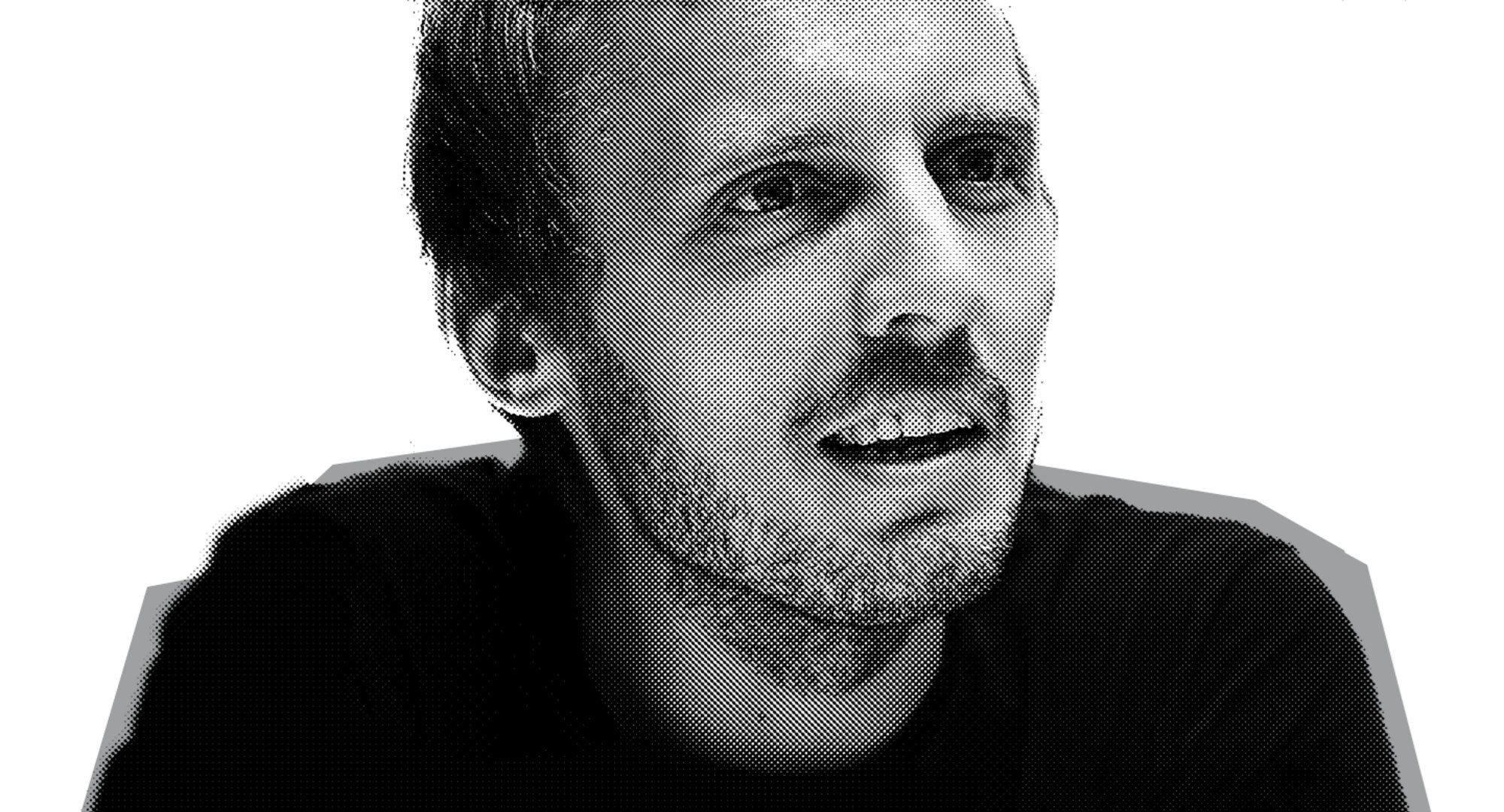


Fighting for freedom or conquered without tanks | Michal Hvoretsky
Earlier this summer, Tbilisi was at the centre of an intellectual exchange about the future of Europe – and it's past. The Tbilisi Debate on Europe gathered leading international and Georgian writers, scholars and journalists to confront urgent questions of freedom, history and democracy. The event culminated in the Tbilisi Speech to Europe, delivered at Ilia State University on 13 June by Slovak novelist and essayist Michal Hvorecký.
Combing analysis with irony and compassion, Hvorecký confronts a Europe losing faith in its own freedoms. His speech links Georgia's struggle with Slovakia's democratic decline – and exposes the fear, propaganda and complacency driving both. It is a warning against authoritarianism, but also a declaration of solidarity with those who refuse to surrender. Europe’s future, Hvorecký argues, is being fought for on the streets of Tbilisi. And the time to defend it is now.
- Carl Henrik Fredriksson, Programme Director at Debates on Europe
The Tbilisi Speech to Europe
By Michal Hvorecký
December 10th, 1989, was a bright, frosty, snowy Sunday. I can still remember it vividly. I set off in the early morning. Nearly a quarter of a million of my fellow citizens accompanied me on this first march towards the West called Ahoj, Európa! – Hello, Europe!
This day was the culmination of the Czechoslovak Velvet Revolution. I started my journey on the Danube riverbank, in the park of Petržalka, which belonged to the Nazi Third Reich during World War II.
We soon reached the border, and it wasn't only snow that was falling but also the statistical records of the Austrian border control. The customs officials tried to count everyone but gave up after reaching one hundred thousand – the security forces were overwhelmed, and, after half an hour, passports were no longer being checked.
Such a walk was still illegal. The inexperienced revolutionaries had no idea that they were infringing on the border guards’ authority, or that they were about to open the frontier to a hostile state without the requisite visas. In fact, they were violating every regulation still in force. Yet the time in which I lived was both hectic and magical.
After brief negotiations, it was finally possible to cross the border, yet the guards were unsure of how to behave in this new situation – it seemed as if their world would soon be a thing of the past.
For the first time in my life, I entered the free world. I had no idea how to behave either, for I was witnessing an unimaginable event. For generations, people had feared this border. Merely approaching it could be life-threatening. Soldiers patrolled the area around the clock and could search people and homes at will. At night, gunshots, barking dogs, and screams echoed through the darkness. Dozens of people lost their lives here.
Before 1989, Czechoslovakia had been a brutal, four-decade-long dictatorship. Even moderately liberal Hungary, with its 'goulash communism', was seen as an unattainable capitalist promise of happiness, and unknown Yugoslavia was like a completely different planet from my dreams.
Neither I nor my parents were able to visit Vienna or Munich at the time. In fact, we did not assume that it would ever be possible. But now, unexpectedly, I was standing on the threshold.
I was surprised by the reactions of the Austrians: there was a genuine, unforgettable Willkommenskultur, a welcoming culture.
We considered Czechoslovakia a European country. Three generations dreamed of this comeback after the half century of misery of the 'Kidnapped West', as Milan Kundera called it in his essay. He argued that nations like Poland, Hungary, and his native Czechoslovakia are fundamentally Western by culture and history but were tragically swallowed by the Soviet Union. He lamented that Western Europe forgot this, viewing them merely as part of an alien Soviet East.
Seen from the other side of the Danube River, the same world looked completely different. The sight overwhelmed me, and I was not the only one; many rubbed their eyes.
In August 1986, eighteen-year-old Hartmut Tautz from Magdeburg died not far from the border. Twenty-two metres from Austria, he was caught by a pack of dogs. The student and talented musician, a clarinettist, wanted to leave East Germany after the death of his father, a dentist. Hartmut's injuries were not serious, and he could have been saved, but he was denied medical treatment. Instead, he was brutally interrogated and abused. Even after his death, he did not find peace. His mother, a well-known dancer, fought with the Czechoslovakian and East German authorities to recover his body. Finally, she was told that her son could be transferred to Magdeburg for burial – but on one condition: she was not allowed to open the coffin lid. The funeral was attended by 1,500 people, including relatives from West Germany and, of course, the secret police Stasi.
This all went through my mind as I stood there, confused and happy, watching events unfold. The history that had been moving at a snail's pace for decades began to trot right before my eyes, eventually breaking into a wild gallop.
I was almost thirteen years old. We lifted the Iron Curtain together in this wonderful way. The old world suddenly came to an end. In late December of that year, 1989, I stood in front of the Hofburg Imperial Palace for the first time, completely perplexed, and asked myself: Am I really in Vienna? Is Václav Havel our president? He was released from prison just a few months ago! Is all this even possible? This felt so unreal I had to pinch myself. My childhood ended.
Hello, Europe! I'm here. We're here.
36 years later, on April 2nd of this year, 2026, I walked through my city of Bratislava, the capital of Slovakia, and saw Georgian flags all around me. A white rectangle, a large red cross touching all four sides and in the corners four grapevine crosses. At first I thought this must be some kind of sports event: maybe a football match? But soon I realised, this was something completely different.
Georgian President Mikheil Kavelashvili had arrived in the Slovak Republic for the first time. He was welcomed by Slovak President Peter Pellegrini and met high parliament representatives and the Economy Minister. I was in shock. This felt so unreal I had to pinch myself again. No other European Union country had until then officially invited the Georgian President.
Kavelashvili and Pellegrini have many things in common. They both listen carefully to what Moscow, the Kreml, has to say. Their election campaigns were heavily criticized by watchdog groups, opposition leaders, and international monitors for unfair advantages, illegal campaign spending, and the exploitation of deepfakes and disinformation.
Pellegrini's allies pushed false claims that the opposition candidate would drag Slovak soldiers into the Russian war against Ukraine or surrender the country's EU veto power, despite the president lacking the constitutional power to do either. On his billboards, Pellegrini erased the Ukrainian flag off a soldier's uniform and claimed that, if his opponent wins, Slovak men will immediately have to enlist in the army. He falsely accused his main rival of being a “war president”. This tactic, spreading fear, prejudices and hate-speech worked, unfortunately.
In Bratislava, Mikheil Kavelashvili discussed Georgia's membership in the European Union. However, Tbilisi's accession process was effectively frozen due to actions taken by the government from which he himself emerged.
During the talks, not a single word was devoted to the fate of the imprisoned Georgian poet Zviad Ratiani or the journalist Mzia Amaghlobeli, recipient of the Sakharov Prize, who faces a two-year prison sentence in a politically motivated trial.
In Rustavi Women's Colony No 5, Mzia has almost lost her eyesight. She writes now in encroaching darkness about the darkness falling across her country, Georgia. She is not scared in her prison cell, she fears what she will find one day outside – a country fighting for freedom, or a country conquered without tanks?
The ruling Georgian Dream party has jailed dozens of activists, investigative journalists, and opposition leaders.
Nor did Pellegrini criticize Georgia’s police force for its repeated use of water cannons and pepper spray against peaceful demonstrators in Tbilisi. There is even evidence suggesting that the authorities deployed a chemical agent dating back to the First World War to suppress anti-government protests. Despite all this, Georgia’s democratic opposition continues to struggle for the international attention it deserves.
Not since the first-ever state visit by a British monarch to Slovakia – by Queen Elizabeth II in 2008 – was there such a huge ceremony for a foreign representative as in the case of Kavelashvili. The rest of Europe still doesn't want to recognize the Georgian President; big parts of the international community questions his legitimacy. Moreover, many Georgians do not recognize him either.
So why exactly this state visit to Bratislava? Because of Russia. In 2020, Russian minister of foreign affairs helped Peter Pellegrini to win the election. Slovak Prime Minister Robert Fico and Russian President Putin maintain a close political partnership of kleptocrats. After Viktor Orbán's defeat, Fico remains the Kremlin's closest ally within the European Union. Their relationship, built on shared ideologies and economic necessity, serves as a consistent thorn in the side of Western unity regarding the war in Ukraine.
Instead of countering Kreml propaganda, Slovakia's leadership is using it as a political tool to gain and maintain power.
Slovakia is one of the EU’s most vulnerable countries to disinformation, much of which is now being amplified even by its own government. For more than twenty years now, I have been living in a hybrid information war, that divided society ever more deeply, spreading targeted disinformation and half-truths, brainwashing the public, fuelling panic, distrust and uncertainty. In Moscow, they have always found money for propagandists and provocateurs abroad, even when there was nothing to eat at home.
For two and half years, Slovakia has been challenging many European Union decisions – on legal issues, energy policy, and democracy – which has led to intense friction with Brussels.
My country is a sad example of how fast things can shift in 21st century. Prime minister Fico, now pro-Russian national-conservative, former social democrat, came to power for the fourth time in 2023. With him, Slovakia is on a path toward authoritarian rule, perhaps even sliding into fascism. However, today’s fascism cannot be compared to that of the past, of the interwar period. In the digital age, it has taken new, but no less dangerous forms.
Slovak democracy is dying, but it is not quite dead yet. It is time to listen closely to our friends in Georgia and elsewhere in Europe and engage in a deeper, cross-border exchange, comparing our experiences and learning from each other. Only in this way, we can develop effective strategies for sustainable resilience together.
Tens of thousands rally regularly in the capitals Bratislava and Tbilisi, and elsewhere around both countries, to protest the repressive policies by their respective governments, who are trying to pull Slovakia and Georgia away from their democratic aspirations and into Russia’s orbit.
Prime Minister Fico’s fourth government is gradually eroding the institutions that constitute a liberal democracy – arguing that this is how the “true will of the people” is finally being implemented.
What can be expected when the enemies of liberal democratic institutions and the free cultural scene come to power? What does it mean to have an anti-European government in the heart of Europe?
In Slovakia, things have turned out much worse than expected: attacks on the rule of law, weakened state institutions, conspiracy theories such as that of the great replacement, censorship of critical journalism, the erosion of women’s rights, harassment of queer people. Russian propaganda is, again, being broadcasted on national public television and radio! The list grows longer every month, every week, almost every day.
More people across my country are being incited to live in the fantasy world that online propaganda leads them to believe. The government tries to persuade the public that the virtual worlds they invented are more real than reality itself.
Like in the thrilling world of the novel Adibas by Zaza Burchuladze, where it is almost impossible to distinguish fact from fiction, big corporations and corrupt governments manipulate both the media and people’s thoughts and feelings. It is a dangerous, bleak, cynical, and amusing portrayal of a divided society at civil war. In this version of Georgia, Russian fighter jets are thundering overhead, and soldiers have surrounded Tbilisi. But a few young city hipsters couldn’t care less about the war right on their doorstep. It is a tragic satire describing the falsification of life, invaded by consumer goods and consumer sex and even consumer carnage. Humankind is having a feast in times of plague.
In the real Slovakia in the year 2026, the fact that two ministries are run by neo-fascists has devastating consequences for culture and environment. Twelve years ago, our minister of culture, a former news presenter, started her own online TV fake news channel, where she regularly hosted racists, neo-Nazis, anti-vaccine advocates and conspiracy theorists. She posted online about the “threat of chemtrails” and shared absurd false claims, such as the one that the EU wants to ban toilet paper and replace it with straw. Her own TV Slovan (Slavic) became a gateway for Kremlin propaganda in Europe. Her chief of staff at the Ministry of Culture believes that the planet Earth could very well be flat. This is not a joke. He also believes that the Illuminati are using Islam to destroy western civilization. In his view, Putin uncovered this. Furthermore, he claims that the Americans instigated the Maidan protests in Kyiv and installed a “Zionist puppet government” in Ukraine. On his Telegram channel, he recently warned of an alien invasion.
This is a frontal assault on reason.
As the great Austrian writer Stefan Zweig confided in his autobiography The World of Yesterday, written in exile: “I have a pretty thorough knowledge of history, but never, to my recollection, has it produced such madness in such gigantic proportions”. If only he knew the current Slovak government, poor Stefan Zweig, he might have been a happier man of his time!
Our minister of culture lied her way into the parliament and into the government. Her hate-speech spread exponentially across social media. She benefited from the algorithms on Facebook, TikTok, and X, and was also supported by anonymous accounts that hyped her up with AI-generated content. Unregulated, for-profit technology companies dictate the flow of political discourse. Digital capitalism has shook hands with the new fascism.
And now we have to deal with the consequences. From national parks to national museums, galleries, archives, film festivals, theatres and libraries, Slovak ministers of culture and environment replaced leaders across the board, filling all key positions with their own people, with loyal old comrades-in-arms, oligarch friends, party sponsors or even just neighbours, regardless of how unqualified they were.
Now Robert Fico wants to change the electoral law and ban the postal voting from abroad – Slovakia has a very large diaspora, people living in exile. At the heart of this plan is the wish to stay in power at any cost – the dream of all autocrats.
The space for democratic discourse shrinks. Some new Slovak and Georgian laws that target human rights groups, NGOs and independent media have been modelled on legislation passed in Russia.
But is this an eastern European problem only? Unfortunately, not.
In many countries around the globe, reactionary voices are trying to push through an agenda that threatens not only the common democratic project but also the achievements of decades of social and civil society movements that have advanced progressive policies. The global assault on reason could mean the end of enlightenment and emancipation. And the end of the European project.
The power dynamics in global politics have shifted. Governments find themselves increasingly surpassed by big-tech moguls and impulsive wannabee autocrats such as Fico, Alice Weidel, Herbert Kickl or Andrej Babiš: shaping the world through manipulation, ceaseless deception, and chaos.
For too long, the established parties such as socialists, liberals or Christian democrats have downplayed this threat. When they finally reacted, they often resorted to the rhetoric of the new right, particularly regarding migration or environment. Mainstream parties strengthen the reactionaries by trying to copy its policies. This imitation has the opposite effect, nourishing the challengers rather than neutralizing them: just look at the polls in Austria, Germany, England or France.
Seeing this, I realize that the achievements of the European Enlightenment are not set in stone, and that the progress that was moving in the right direction can be reversed.
But why, thirty-six years after the Iron Curtain fell, do so many people support the ideology of nationalism and want to abandon liberalism?
Fake news has dismantled our shared reality and established a post-truth environment. Weaponized, power-driven lies have been designed to create a cacophony of conflicting information that has disoriented the public, making more people feel helpless.
The resulting gridlock has weakened faith in public institutions and paved the way for populism. Prolonged economic stagnation and deepening disillusionment with traditional political institutions have further legitimized reactionary forces.
In central and eastern Europe this has a lot to do with the neoliberal economic transformation, which brought certain economic growth but also catastrophic social costs, soaring inequality, and a rise in right-wing populism. The harsh "shock therapy" was not only a path to success. Radical privatization and chaotic deregulation created oligarchy and devastated local industries and caused mass unemployment. Business tycoons with enormous influence have funded and manipulated governments.
But it has also a lot to do with the with history, with coming to terms with the own past.
After the war, Slovakia, just like Georgia, was a colony of Russia for many decades, a satellite of Moscow. The Red Army established a totalitarian regime under the rule of the Communist Party. Liberators became occupiers.
When I look out the window of my writing room on Štefánikova Street, I see the Slavín Memorial on the hill – a Bratislava landmark, a war memorial and military cemetery dedicated to the Soviet Army.
Time and again, members of the fascist motorcycle club, biker gang Night Wolves, visit this site – just as the Lenin Pioneers and Komsomol members used to do – often alongside the Russian ambassador, vatnik and warmonger. The anti-Western extremist group regularly visits various such memorial sites, fanatically supporting Putin and Russia’s genocidal war against Ukraine and denying the brutal occupation of Czechoslovakia in August 1968.
When I was a child, there were still hundred thousand Soviet soldiers stationed in Czechoslovakia. It was not until June 1991, that the last of them left my homeland.
In Bratislava today I can still stroll down Moscow Street, shop on Tupolev Street, or walk to work on Lomonosov Avenue. I attended high school on Red Army Street. There are still 36 Russian street names in the capital of Slovakia. The occupiers left a deep mark on the Danube metropolis.
After the fall of communism, my country did not decolonize itself, did not de-Russify. The propagandistic legacy of the Bolshevik revolutionaries and founders of the Soviet Union is still visible in the most prominent locations of large and small towns and villages.
All the better, then, that a street not far from the Russian Embassy is now named Ulica Borisa Nemcova, after the Russian opposition politician Nemtsov, who was shot dead in Moscow in 2015.
But on the edge of Bratislava, in Rača, there is also Rustaveli Street! And because there is a Rača region in Georgia, too, in 1977 a movie was shot called Rača, moja láska – Rača, my love! In the film, Zauri falls in love with Darina. It’s a musical comedy about love, wine and Soviet style sex – meaning not a lot of sex. I will never forget the sentence from this movie: Look, Wine Museum?! What is it for – Wine Museum!? Wine is there to drink, not to look at!
And there is an unforgettable sentence about democracy, too! "That's this democracy of yours! I can't even be away for two weeks, and everything (in my garden) is overgrown with weeds!"
Having suffered under the rule of the Soviets for decades, both our countries are still trying to get rid of the remnants of that totalitarian legacy.
But Slovakia once was a country that also did big things. With the flat tax and massive investment from global players in the 2000s, it boasted one of the continent's fastest growing economies. My country joined the EU and NATO in 2004 and uses the Euro as currency since 2009.
However, democracies are fragile and should never be taken for granted. Freedoms that seem secure can be lost. Today, faced with pressing challenges – housing shortages, high inflation, climate crisis, dilapidated infrastructure – Slovakia feels stuck and disappointingly ranked the fifth most corrupt of the twenty-eight EU countries in 2025. Up to 90% of Slovaks consider corruption widespread.
The solution for all of this we can only find together.
We urgently need Ukraine and Georgia in the European Union – to make it stronger, more diverse, greener, to support its aging population, to sustain its economic growth – and to make it more Eastern European, balancing between the West and the East!
I strongly support the aspirations of the Georgian people for EU integration. We need your consistent resilience. The bravery of your citizens waving European flags in Tbilisi and elsewhere.
Georgians, despite being invaded by Russia in 2008, and the ongoing arrests and kidnappings of its citizens in the Russia-occupied territories of South Ossetia and Abkhazia, still choose Europe. These so-called frozen conflicts are anything but frozen in terms of their destabilizing effects. This military invasion was a defining moment marking the end of the post-Cold War era. Georgia was a blueprint for Putin. The Western powers underestimated this war and failed to properly react to the predictable expansion of Russian imperial power.
The Georgian youth are still leading the fight against exhaustion, against despair and the cold calculation of those who would sell and betray our freedom.
Dictators always lie about what they've done, but very often they tell you exactly what they're planning to do.
In 2005 Vladimir Putin, in his second term, in control of nukes and an enormous amount of money, addressed Duma and Senate. He said: "The collapse of the Soviet Union was the greatest geopolitical catastrophe of the 20th century."
He made it very clear then, and for those who didn't want to hear him saying it in Russian in Moscow, he repeated it in 2007 at Munich Security Conference. Next year he attacked the Republic of Georgia.
Now we know, thanks to Ukraine and Georgia, that Putin will never be able to restore the horrific Russian Empire and he will never push NATO back to its 1997 borders.
And we cannot allow the darkness to fall across Mzia Amaglobeli's country, Georgia.
In danger, Slovak and Georgian civil societies act promptly, decisively, and proactively. With tens of thousands of fellow citizens, I protest almost every second Friday on the streets and squares against the government. We stand up for our principles. The size and determination of Slovak civil resistance since November 2023 has been incredible and inspiring, like nothing I have seen since the murder of the investigative journalist Ján Kuciak and his fiancé Martina Kušnírová.
Georgia is inspiring Europe. We need to understand your history, your story, your storytelling, your fiction and poetry. Let's get the Black Sea into the EU! This region played a formative role in the creation of the very idea of Europe. Here the ancient Greeks encountered the nomadic Scythians, the bearded nomads.
The very first Georgian novel, a work on the martyrdom and death of Holy Queen Shushanik, dating to the fifth century, tells the story of a woman who refuses to obey her husband due to religious differences. Georgian literature has always been one of the most significant and efficient weapons of emancipation.
Way back in the twelfth century, the poet Rustaveli was exploring liberal ideas and gender equality. Just look at this sentence (as translated by Lyn Coffin): "Lion's whelps are equally lions, though female or male they be."
Georgia was one of the first European countries where women were granted voting. In 1919, five women became deputies in the elected parliament. Georgia was also the first country in the world to elect a Muslim woman to the local government in 1918.
In April 1978, massive demonstrations in Tbilisi successfully responded to an attempt by the Soviet government to change the constitutional status of languages in Georgia.
Let's help our brothers and sisters find their way back home to Europe! As we, the Czechoslovaks did in 1989.
* * *
I imagine Europe with you, where education and culture become our common European priorities.
Where arts and humanities are not an ornament. They are the record of what human minds have created, imagined, and endured. Culture gives us the ability to navigate the nuances of human interaction, to learn from the past, and apply those lessons to the present in a constantly changing world. It teaches us empathy, deep critical thinking, and ethical decision-making.
I imagine Europe with Ukraine and Georgia, a Europe where storytelling is a vibrant, diverse field, blending ancient oral traditions and modern digital applications to foster cultural heritage, social cohesion, and innovative communication.
I imagine European governments understanding that complex challenges such as climate change or artificial intelligence require new mindsets.
Poetry, fiction and non-fiction can offer a language to address these challenges, teach us to listen to marginalized communities, to reconsider our relationship with nature, to bridge gaps between us.
In December 1989, I started to learn that freedom is the very reason for being – it enables us humans to create meaning and values.
In 2026, I know, we can lose so much.
Whenever I’m in danger of losing hope, I walk through the Bratislava Old Town. Early on a Sunday morning – it’s still deserted at that hour – I want to attend mass at the Gothic church. From Jewish Street, I can see the tall tower of the St. Martin’s Cathedral. Perched at its summit is a 300-kilogram replica of the Hungarian royal crown. For more than 250 years, this cathedral served as a coronation church. Maria Theresa was also crowned here as the first Habsburg monarch – not as queen, but as king.
For seventy years, a Neologue synagogue built in the Moorish style stood next to the city’s largest Catholic church. It was demolished in 1967, and today the city highway runs directly past the cathedral instead. The communist government demolished many buildings in the former Jewish quarter. When the Soviets searched the cathedral catacombs for a counter-revolutionary cell during their 1968 invasion, numerous historic buildings were destroyed in an absurd attack.
Near the cathedral also stood the school (closed by the Nazis in 1941, demolished by the Communists in the late 1960s) of the famous rabbi Chatam Sofer from Frankfurt, who is buried not far from where the tram tunnel ends. To this day, the underground tomb remains an pilgrimage site for Orthodox Jews from around the world. Students and descendants of the founder of the famous Pressburg Yeshiva established similar Jewish institutions of higher learning in many countries: in Israel, Hungary, the United States, and England.
Right next to the cathedral was the headquarters of Anton Bernolák’s Catholic Society, which was the first to attempt to codify the Slovak language. And at the Protestant Lyceum on nearby Konventná street, many Enlightenment thinkers from the “National Revival” in the 19th century studied. Even without their own state, the Slovaks nurtured their language and national culture for centuries.
I enter St. Martin’s Cathedral through its massive Gothic entrance door. Beyond its artistic value, this entrance stands as a testament to the dedication and exceptional craftsmanship of generations of artisans. I am immersed in a world where history and culture merge.
Only about twenty elderly people gather for the mass held in German, the language of my grandfather. Nearly seventy meters long, the interior of the church is far too spacious for this small remnant of the German-speaking community. Hundred years ago, only one in seven of Pressburg’s inhabitants was Slovak. Holy masses were mostly celebrated in Hungarian and German.
The candles are lit, the congregation sings along heartily, and after just a few minutes I feel like part of a small community. I think of my grandfather Stefan Kirchmayer and his Zipser Deutsch, an old forgotten dialect of the German language, of his lost city, his vanished world.
The acoustics in the space is unique; Franz Liszt himself tested the sound of the historic organ. I do not stay for the eucharistic celebration; instead, I linger briefly in the side aisle before the oldest surviving sculpture from Central Europe made from lead. The Austrian Georg Raphael Donner created it around 1735.
It shows Saint Martin cutting his cloak in two to share it with the beggar. Eighteen oxen and two hundred people pulled Donner’s artwork on carts through the streets of Bratislava – Pressburg – Poszony to the cathedral for three days. That’s how strong the Hungarian-Slovak-Austrian friendship once was. I wish the alliance between Europe and Georgia to be that strong!
I step back out into the open air.
I am in Bratislava, and I am ready to remain restless.
Hello, Europe! I am still here. I am in Tbilisi. We are here. More than ever.
Let's take care of our democracy just like of the gardens and vineyards in Rača in Slovakia and in Georgia. If we don’t take care of it, it will become overgrown with weeds! And please don’t forget: Wine Museums? What for? Wine is there to drink, not to look at!
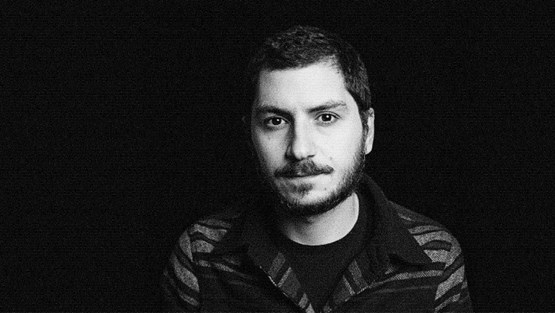
Photo: The Aspen Institute Central Europe
We Recommend
Mussolini in Tbilisi | Archil Kikodze
08.06.2026