


Once Upon a Time in Mexico. A Little About Aleksandre Koberidze's Film | Salome Kikaleishvili
I remember Mexico from my grandmother’s room: in a bookmark brought back from a tour five years before I was born; in the plate that hung above her bed; and in the necklace of white stones that I am wearing now.
Fifty years later, it was my turn to go to Mexico.
I have to write about this journey. I’m afraid that, unless I do, I will lose it.
It is a black-and-white photograph. A young woman lies on a checkered blanket spread on the ground beside an old concrete wall, blotched with damp. She is naked. One arm is tucked beneath her head, and she offers her breasts proudly to the sun. One leg is crossed over the other; her feet and upper thigh are tightly wrapped in athletic bandages, the kind worn for training. Her eyes are closed. She is perfectly still. I look at a photograph taken nearly a hundred years ago: at the woman’s body, the faint definition of its muscles, her nipples raised, the sunlight scattered across her face.
“Would you like to take the book with you?” the Mexican consul asks me. “You can bring it back when you return for your visa.” I would like that very much, but, for some reason, I feel shy. I shake my head—slightly awkwardly—to say no. Instead, I write down the photographer’s name on a piece of paper: Manuel Álvarez Bravo.
Guadalajara
In February, Nemesio Oseguera Cervantes—better known as El Mencho, the fugitive leader of the Jalisco New Generation Cartel, or CJNG, one of Mexico’s most powerful criminal organizations—was killed at his luxurious ranch near Guadalajara in an operation carried out by Mexican special forces with U.S. intelligence support. The killing was followed almost immediately by cartel reprisals: armed attacks, panic, fires set at gas stations and other businesses, and loss of life. Besides being associated with the country’s most powerful cartel, Guadalajara, the capital of the state of Jalisco, is known for its international film festival, considered one of the best in Latin America.
That is where I am going.
There are three of us on the FIPRESCI jury—the jury of the International Federation of Film Critics: me, transplanted from Georgia to Portugal; Azadeh Jafari, who fled Iran for Canada; and Alfredo Naime, the Aztec. Whenever we sit down beside one another, we begin telling each other about our respective troubles. Sometimes I take Iran on as my own, too, cutting back and forth between our stories as though in parallel montage. The moment Alfredo begins talking about Mexico, I realize that everything I have ever seen onscreen about drug dealers, trafficking, and cartels is true—I am inside an episode of Narcos. We travel through the city almost entirely by car. The heat is too oppressive for much walking and, I am told, it is safer for us this way. Two young Mexicans, both about my daughter’s age, have been assigned to us: Luis Pablo and Jules. Wherever you go, we are told, they will go with you.
We begin with the murals.
The Hospicio Cabañas, which opened in 1810 and once served as a refuge for orphans and the sick, is now a museum. The severe lines of its Neoclassical architecture now contain contemporary exhibitions. Most visitors, however, come to see the murals of José Clemente Orozco, whose celebrated The Man of Fire crowns the chapel’s dome. Twenty-seven metres above the floor, immense figures seem to merge into one another. Everything is massive, monumental. You want to open your eyes as wide as possible and study this enormous work—known as the “Sistine Chapel of the Americas”—carefully enough that nothing escapes you.
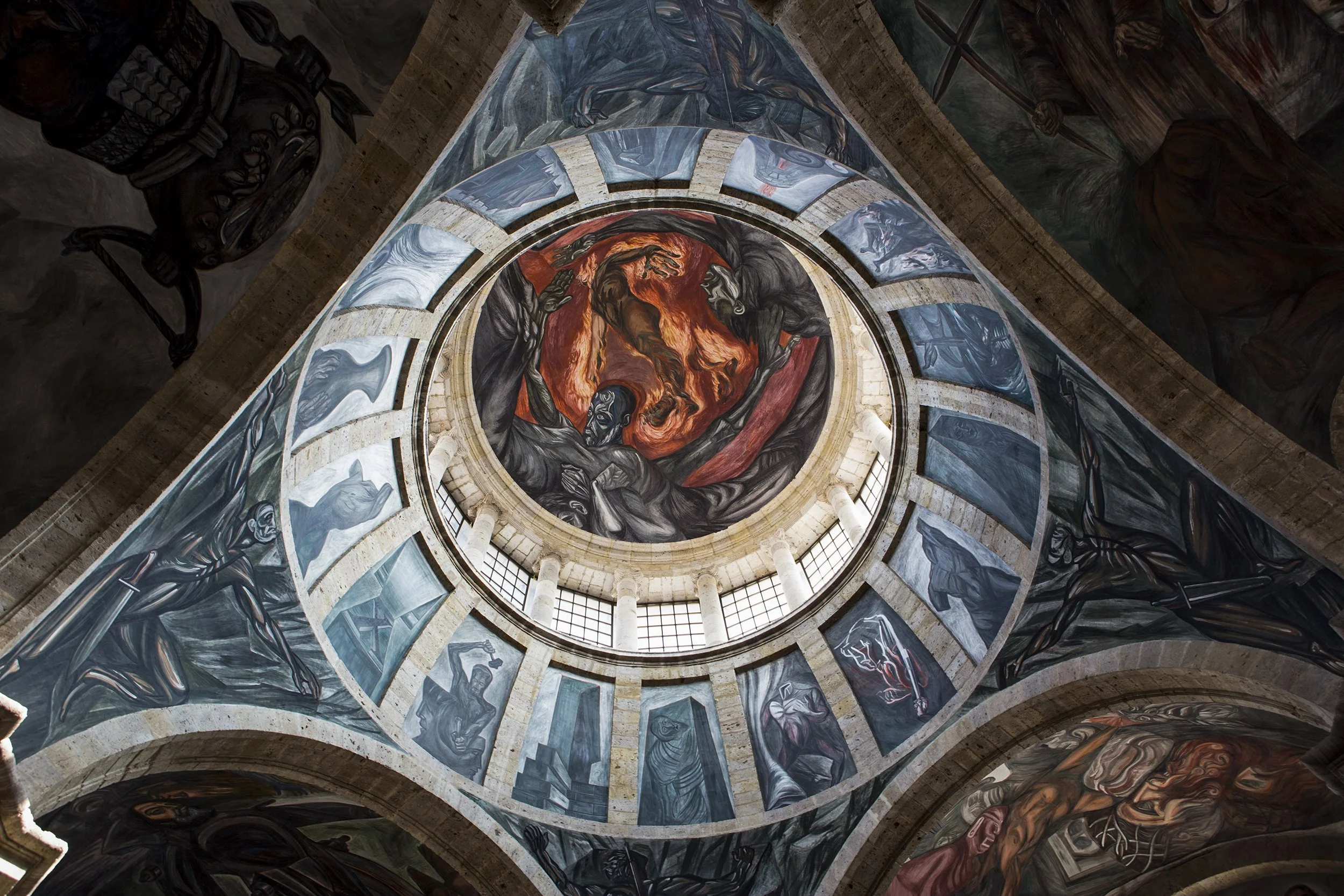 Ceiling of the Hospicio Cabañas. "Man of Fire" by José Clemente Orozco
One of the rooms in the gallery contains work by contemporary Latin American artists. None of it requires explanatory wall texts or the strain of prolonged scrutiny. Everything is lucid and simple and, at the same time, magical: the sculptures of worms assembled from fragments of marble; the game of life and death embroidered in thread across a vast canvas.
From Museo Cabañas, we drive to MUSA, the University of Guadalajara Museum of the Arts, this time to glimpse the obsessions shared by Orozco and the Soviet filmmaker Sergei Eisenstein. Their connection has been preserved in their letters and in the sketches they sent back and forth. After a failed project in Hollywood, Eisenstein—the theorist as well as the filmmaker—arrived in Mexico in the early nineteen-thirties to make a film about the country’s revolution. He never completed it. The funding was cut off, and soon afterward came a message from Stalin, asking whether the Soviet director had perhaps grown a little too fond of his prolonged voyage. At the time, naturally, such a message could mean only one thing: he was to return home at once. Eisenstein was not allowed to take the footage with him. Years later, others completed the film. In MUSA’s projection room, it is playing now: ¡Que viva México!
After Eisenstein’s kitschy sketches, the mosaics of Guadalajara Cathedral seemed all the more interesting. We soon left the cathedral and stopped by its rear entrance, directly opposite a small park. The sun was no longer scorching, and a strong wind had risen suddenly, blowing cool against us. I took a deep breath and, satisfied with my encounter with Mexican art, looked across at the park and its stone benches.
Several people had spread pieces of cloth on the ground and laid out all manner of brightly coloured nonsense for sale. The benches were patterned in much the same way, as though someone had wrapped them in newspaper. I walked over to one of them. Twenty or thirty notices, all the same size, had been pasted across it. Each carried a large photograph of a person, accompanied by a list of identifying details: hair and eye colour, height, where they had last been seen, what they had been wearing. At the bottom was a telephone number and the words: “If you have seen this person, please call.”
I looked at the other benches and realized that every one of these “colourful” surfaces told the stories of twenty or thirty—or perhaps even more—missing women and men. I studied the dates. Some had disappeared only recently; others four or five years earlier. Most of the photographs were in colour. Jules was standing beside me. At the Monument to the Niños Héroes, she said, there were even more notices. I asked her to take me there. Only then did I notice that the street poles around us were covered in notices, too.
Jules must be twenty or twenty-one. She studies animation. She answers my ceaseless questions thoroughly and, in love with Mexico, speaks about her country with great enthusiasm. She is of medium height, her wavy hair falling to her shoulders. As I study her distinctive features, I feel as though I am standing face-to-face with a true Aztec.
On the way, we pass a long building enclosed behind iron bars. It looks abandoned. The fence is ugly, covered in symbols outlined in different colours and painted over one another, with insults and curses everywhere. Abort your inner gringo, someone has scrawled across it in green paint. There is a popular story that, when the United States invaded Mexico, Mexicans saw the soldiers’ green uniforms and shouted, “Green, go!”. “That’s the American consulate,” Jules tells me.
Cars move calmly along Avenida Chapultepec. New apartment buildings are going up all around us. It is expensive to live in this neighbourhood. “A one-bedroom apartment in that new building would cost at least fifteen hundred to two thousand dollars a month,” Jules says. Its terraces look directly onto the square and the smiling faces of the disappeared. “We’re used to it,” she tells me.
According to official figures, more than 130,000 people have disappeared in Mexico since 2006, though the true number is almost certainly much higher. Over the past decade, the number of disappearances has risen by more than two hundred per cent, with Jalisco recording the highest total in the country. Hardly a day goes by without the news reporting another ten or fifteen cases. I think of a Guardian article about Ángel Montenegro. One bright morning in August 2022, the thirty-one-year-old construction worker was waiting for a bus in Cuautla after a night out drinking with coworkers. At around ten, a white van pulled up. Several men jumped out, forced Montenegro and one of his coworkers inside, and drove away. The coworker was released a few hundred yards down the road. Montenegro was not. When his mother, Patricia García, arrived with his wife, his brother, and several neighbors, all they found at the bus stop were his cap and one of his tennis shoes. People taken this way almost never come back, Jules had told me.
For years now, the mothers of Mexico’s disappeared have been forming independent search collectives, taking it upon themselves to fight impunity and discover what happened to their children. Active members of these organizations frequently become targets themselves. Sometimes a tip will arrive: someone has heard that a piece of land beside a certain road, so many miles to the south, has been dug up and bodies buried there. The parents in the collective take their shovels and begin to dig. “You know how it is,” Luis Pablo told me that day. “Say my girlfriend goes to a club. Either I pick her up or her father does. It doesn’t matter what time it is—three or four in the morning. I would rather get out of bed and go for her than have her call a taxi and come home by herself. Sometimes her father says to us, ‘If either of you is ever taken, I would rather know that you were dead.’”
Unofficially, cartels control roughly forty per cent of Mexico’s territory. The Los Angeles Times reported that each cartel recruits approximately 350 to 370 new members every week, in order to replace those lost to arrests and killings. Their ranks are continually replenished with abducted people and with those whom poverty has driven to seek work with the cartels. There are around two hundred active cartels across Mexico. “Being in a cartel is like playing Russian roulette without stopping,” the newspaper writes. Women are needed for prostitution; men, for work in the drug trade and for low-level criminal activity.
***
Luis Pablo tells me that we—the “we” meaning Azadeh, the Iranian, and me—adapted more quickly and found our bearings in Mexico with relative ease. The same cannot be said of the Europeans, who walk around in a state of shock. Every time I order an Uber, a notification appears telling me that I can press a button and have audio recorded throughout the journey; that the car has additional safety features and the entire route is being monitored; that this particular driver, for instance, has a camera switched on. Whenever we call a car, Luis Pablo first checks that the make and colour match the information in the app, then the driver’s name and face, and finally the licence plate. Only after all that do we get in. I have added a new filter to his checklist: how many years the driver has been working as a taxi driver.
Sprawling across forty thousand square metres, Guadalajara’s San Juan de Dios Market is the largest indoor market in Latin America. All kinds of cheese are sold side by side with meat—raw and in every imaginable smoked form—spices, souvenir mugs decorated with skeletons, leather bags, DVDs and CDs, fruit in strange geometric shapes, gold bracelets, silver earrings, even Rolex watches. And should you become hungry, that is no problem either: the market offers an enormous variety of food. Judging from my observations over the course of a single day, at least half a million people must visit San Juan daily, in a city of 1.3 million. It’s hot, someone’s always playing some instrument or other, and you walk around clutching your bag for dear life.
From the market, we went to the theatre. The Neoclassical Teatro Degollado opened in 1866. Fifty years ago, a Georgian theatre company staged The Caucasian Chalk Circle here, and I explain that I want to see the dressing room where my grandmother once sat. As your gaze follows the ceiling, decorated with scenes inspired by Dante Alighieri’s Divine Comedy, you see a great golden eagle suspended above the stage. “According to legend, if the forces of evil ever perform on this stage, the eagle will tear itself loose, fall on everyone below, and crush them all to death,” the theatre representative who has come especially to meet me says with a smile. After hearing the legends, we finally make our way backstage. Inside the dressing room, I find newly renovated walls painted a dazzling white and gleaming modern MAC makeup stations surrounded by lights. “Everything has been replaced. Only these stairs are old,” the theatre representative tells me as soon as she sees the disappointment on my face. I begin examining the stairs. I stare down at them as though I were searching for something.
Tomorrow is the final day of the festival. I already know that I will wear my new rose-print dress. The thought of it noticeably improves my mood.
That evening, we go to the jury meeting and, after two hours of discussion, choose the winner of the FIPRESCI Prize. The festival’s competition programme consists almost entirely of Mexican films. The fiction films—whether dramas, comedies, adventures, or psychological thrillers—are all about death. This does not surprise me. In Mexico, after all, people do not shy away from death; they give the dead the most colourful and beautiful of celebrations. The documentaries, meanwhile, portray the country’s reality: the cartels and the stories of the disappeared.
Reaching a decision was not entirely easy. I believe there are subjects that need to be carried beyond a country’s borders—that it matters to make noise, to speak out. I believe that, eventually, all of this will have an effect. Azadeh disagrees. She reminds me of the Iranian filmmaker Jafar Panahi. “After all that resistance, all those arrests, all that attention from the international media—has anything changed?” she asks, her face set. “It changes nothing.” In the end, we choose the winning fiction feature and write a jury statement explaining our decision to the audience.
The documentary Dear Fátima (Querida Fátima) won three of the festival’s major prizes, including Best Mexican Film. It tells the story of Fátima, who was murdered at the age of twelve, and of her mother, Lorena Gutiérrez, who has spent years fighting for justice.
“Dear Fátima, you were killed ten years ago, but it feels as though it happened only yesterday. Your father and I have spent ten years seeking justice. We have nothing left to lose. We decided to form a collective and make a film together. The whole world must hear your story.” So begins the film, narrated and co-directed by Lorena Gutiérrez.
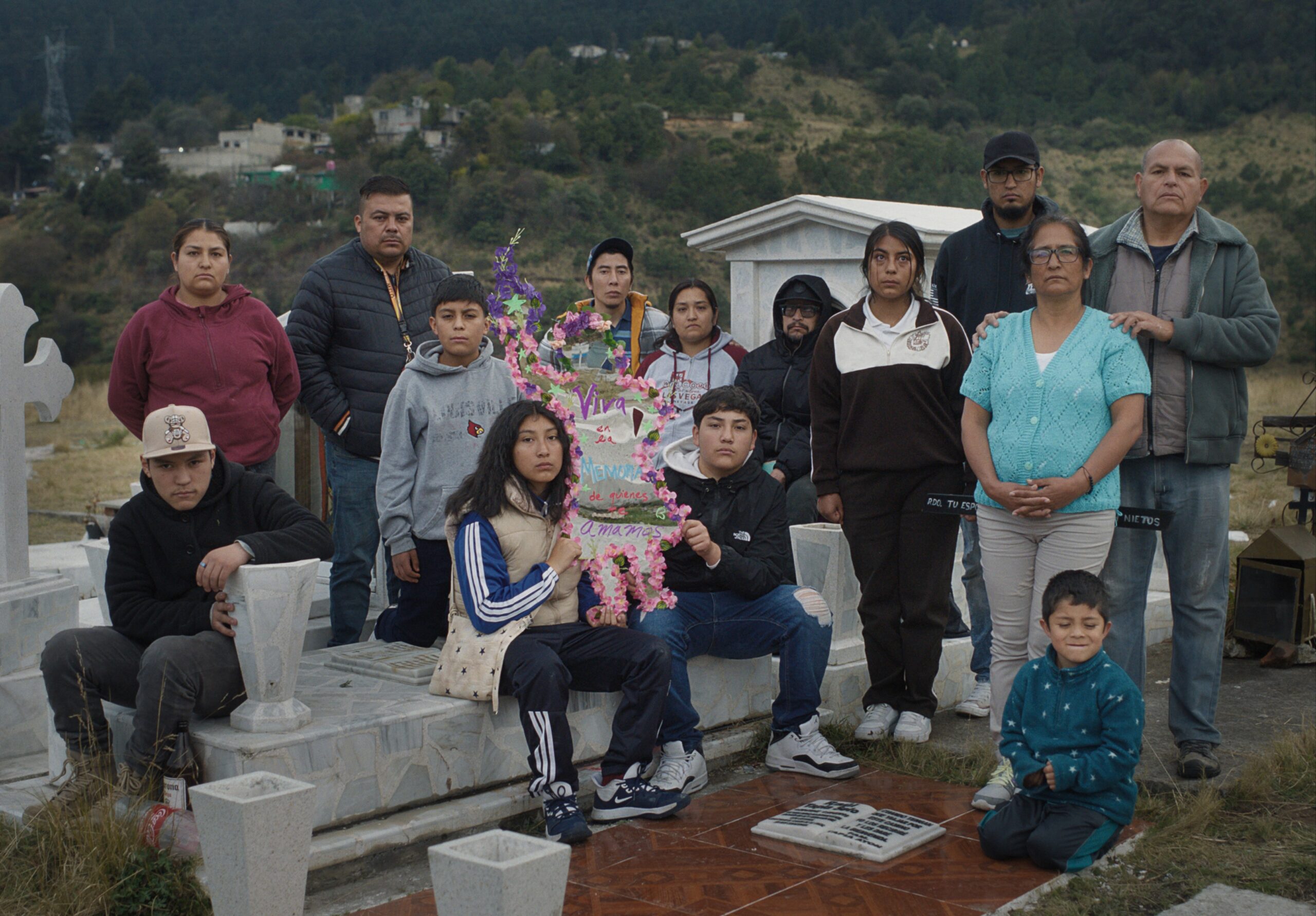 Frame from the film "Dear Fatima"
At first, we see a small group making its way toward Mexico City’s Plaza de la Constitución—the Zócalo. Once there, they unpack their bags and begin pitching tents. International Women’s Day, March 8, is only three days away; it is hard to imagine a more fitting moment for a protest against femicide. Alongside Lorena is Mari Cruz, another mother whose young daughter was murdered. The other mothers in the movement did not dare come. They are afraid. The women demand a meeting with Mexico’s president, Claudia Sheinbaum. They want answers: Why are these cases not investigated? Why are the perpetrators not punished? Each day, against a backdrop of protest banners and portraits of the murdered women and girls, Lorena addresses the people crossing the square through a megaphone. She tells them about femicide, about the need to speak out, about the culture of impunity. She says that, since Fátima’s murder, at least forty thousand women have become victims of femicide in Mexico; that, according to the United Nations, an average of ten women a day are killed because of their gender, while the country’s Congress looks the other way.
The protests in the Zócalo give way to a reconstruction of what happened a decade earlier. The film’s entire narrative feels like one long letter, read by a mother whose daughter has been killed—at times with defiance, at others in a voice that cracks. Her purpose is to make everyone understand how unprotected a woman is in this country; how alone. You, too, must understand how blind and deaf its justice system can be. I remember an article I read on the BBC. In May 2025, the twenty-three-year-old influencer Valeria Márquez was killed during a TikTok livestream in Zapopan, a city in the state of Jalisco. From the outset, the case was investigated as a possible femicide. But the fact that it happened in a city where the Jalisco New Generation Cartel wields considerable power also raised suspicions that the organization might have been involved. The BBC reported on President Sheinbaum’s concern; she said that an investigation was under way.
Dear Fátima ends where it began, with images of the Zócalo. The protesters take down their tents and go home. “One day, they will probably kill me, too,” Lorena says in the film.
Lorena Gutiérrez goes onstage to receive the prize, accompanied by her husband and the film’s crew. “Justice is built by listening. For a long time, no one listened to us. Through this film, I want everyone to understand what is happening here. I want you to help us carry this story out into the world,” she says. Then she begins to chant, and the auditorium joins her:
“Fátima, your mother is still fighting! Not one more— not one more woman murdered!”
“Not one more woman murdered!” the audience calls back.
After the festival’s closing ceremony, we step outside and join an open-air concert. A popular local band is playing an unfathomable mixture of country and rock. Women in evening gowns, teetering on high heels, dance and cry, “Yee-haw!” Everywhere you look, there are mountains of tequila. In the line for a drink, the director Darren Aronofsky is standing behind me.
In Mexico, my mouth falls open—sometimes in wonder, sometimes in fear. I can talk about the Art Nouveau stained-glass ceiling of Mexico City’s Gran Hotel Ciudad de México, designed by Jacques Grüber and composed of more than twenty thousand pieces of coloured glass; about how I am determined to sit on its terrace and drink a coffee. Then, without warning, I can change the subject and begin talking about mothers digging in the earth for graves. Here, all these things exist side by side, on the same plane. And sometimes the contrast frightens me.
Mexico City
The day I arrived in Mexico City, I cried several times. I had never seen a city so beautiful. Jules had said that, were it not for the crime, she could live happily here. I felt that I could, too.
The Zócalo, the city’s main square, is so vast that it seemed to take me half the day to cross it. It was a holiday, and the whole city had gathered there. The lines for the children’s water slides appeared endless. Beside a ring where masked wrestlers were performing, fathers carried children on their shoulders, while adults shrieked with laughter around the splash pads.
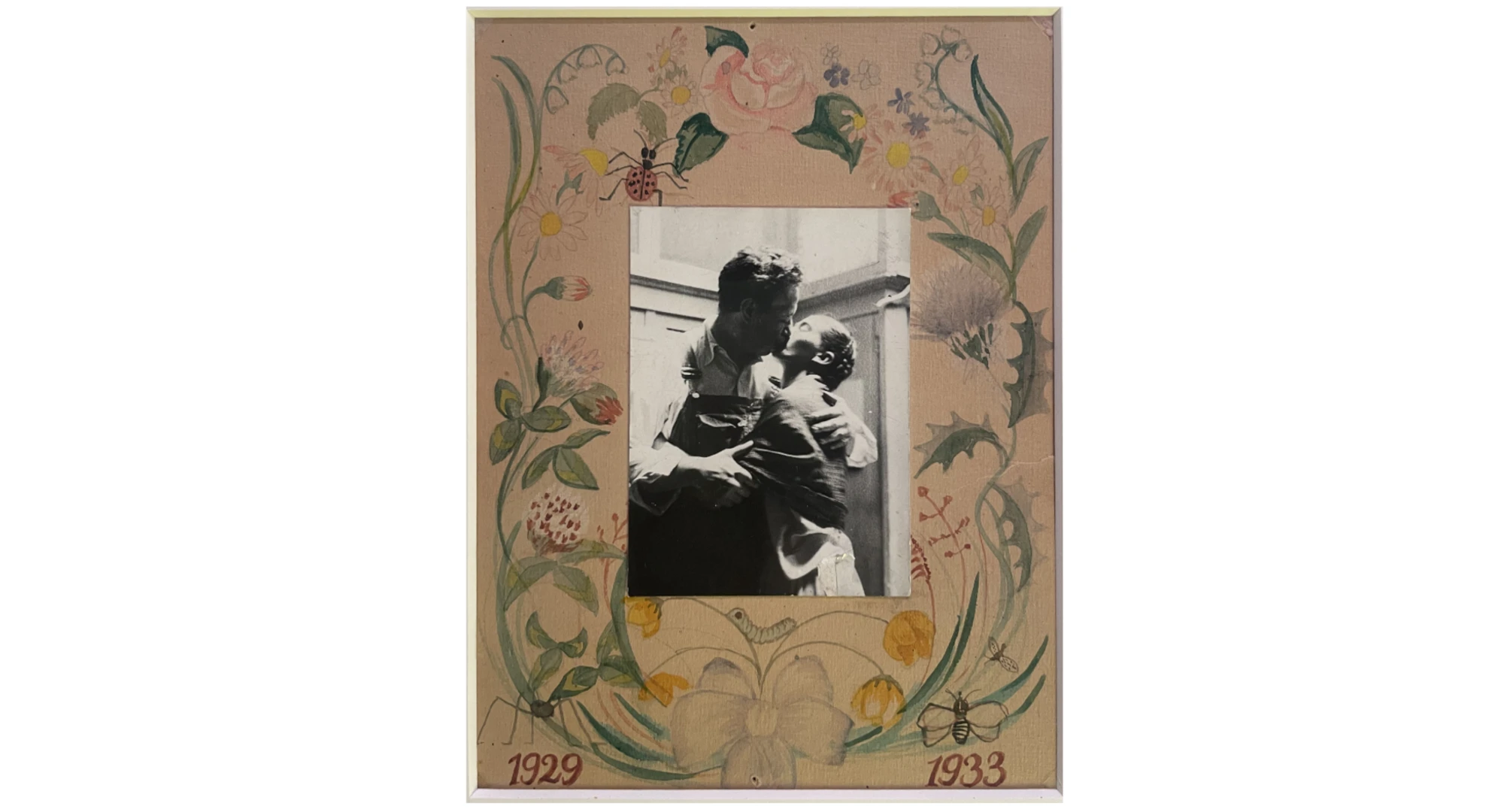 Frida and Diego at the "Blue House"
At the same time, women leaned over the balconies above every bar and restaurant, shouting: “Come to us! Our place is better!”. Someone galloped past on horseback. Nearby, a couple danced to sentimental music. At the edge of the square stood an enormous scaffold, with some twenty workmen dangling from it in the blazing, forty-degree heat. They whistled and waved at the wrestlers below. “¡Oye! Hit him over here! Over here!”
I was alone in Mexico City, without Jules or Luis Pablo. I stayed out of the zones marked red on my phone’s map, and by then I had mastered the ritual of getting into a taxi, performing its elaborate, multistage verification with practised ease.
I saw Alfonso Cuarón’s childhood home, and directly across the street, the house used in his film Roma. He dedicated the film to the woman who raised him. Rarely have I seen a character so quiet and so dear. Whenever I think of Roma, I see her: Cleo, small and Mixtec, sweeping the staircase with unhurried care.
In Coyoacán, I went to see Frida Kahlo. At the entrance, after reading a letter by Diego Rivera, a lump rose in my throat and the tears began to stream down my face. I moved through the Blue House—as colourful as one of her paintings—with a strange heaviness. Then, as soon as I stepped outside, a sudden pain seized me from nowhere. I felt that I had missed something. I went back into the museum and retraced my steps, passing once more the small ceramic figures in their comical shapes; the large, elegant mirrors; the blue details of the yellow kitchen; the photographs of Diego Rivera hanging beside Frida’s bed; her dresses and paintbrushes; the half-full tins of paint and the brightly decorated corsets. What stayed with me most was the mirror her mother had hung above her bed, so that, confined there for months, Frida could look at herself and paint. After visiting the Blue House, it seemed to me that her paintings had changed colour and begun telling me new stories. It was as though I had met her only now, when, behind the strong and fearless woman, I caught sight of the contours of someone else.
From Coyoacán, I went directly to the Museum of Modern Art. I wanted to see more of Kahlo’s paintings. On the museum’s ground floor, I came upon a photography gallery: Manuel Álvarez Bravo. There, I learned that Álvarez Bravo—a foundational figure in Mexican art photography and one of Latin America’s most influential photographers—had belonged, together with his first wife, the photographer Lola Álvarez Bravo, to the close circle of friends around Frida Kahlo and Diego Rivera. Most of the photographs on display were therefore connected in some way to the artist couple. I had never imagined that anyone could photograph Diego like this. In Lola Álvarez Bravo’s portrait, he sits behind a tangle of dry, twisted branches. The background is almost empty, faded and parched as a desert. The severity of his expression is softened only by his hair, carelessly tousled by the wind.
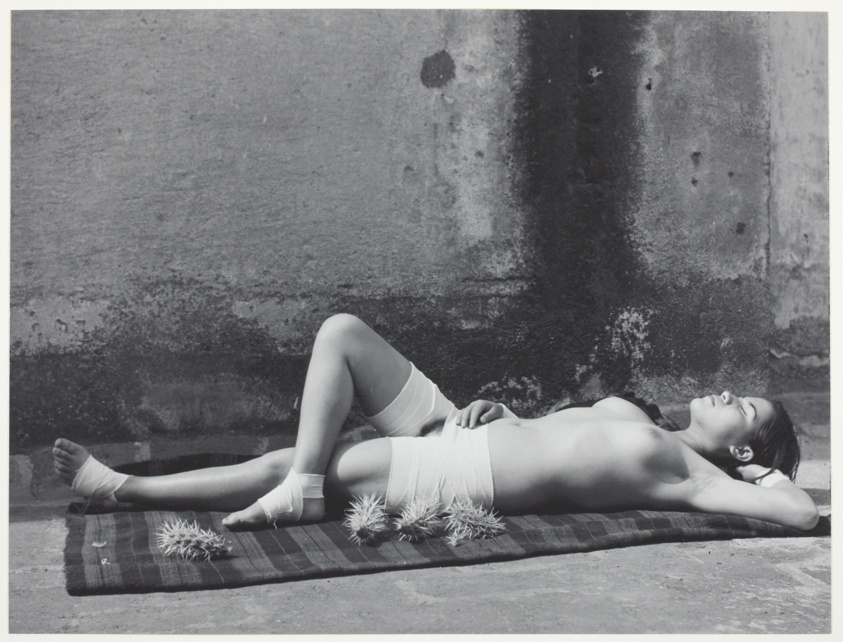 Photo by Manuel Álvarez Bravo
On my final day, I allowed myself a brief tour of the National Museum of Anthropology, choosing only the rooms I had been told I must not miss. After seeing the Maya and Aztec objects, I doubt that anything in this life will ever surprise me again. The jugs, cups, urns, animal sculptures, and ceremonial masks are creations of an exquisite, indescribable beauty. The small stone figures, meanwhile, reminded me of characters from Star Wars and The Fifth Element. Before returning to the hotel, I stopped at the “transparent” Vasconcelos Library. I felt as though I were standing inside an enormous glass ship, filled with glass containers arranged in tiers. In the centre of the hall, a vast grey-whale skeleton, weighing nearly seventeen hundred kilograms, hung down from the ceiling.
Lisbon
The jet lag hit me harder once I was home. In Mexico, perhaps curiosity had kept it at bay. The following day, Alexandre Koberidze’s Dry Leaf was screening at the cinema, and of course I went.
Shot on a Sony Ericsson phone, the 186-minute film follows Lisa, a sports photographer who disappears one day, leaving behind a letter asking not to be looked for. Her father, Irakli, suspects that the letter may not contain the whole truth and sets out to find her. He learns that she had planned to photograph abandoned football pitches in villages across Georgia. Lisa’s friend Levan joins Irakli in the search—a character who remains invisible to the viewer throughout the film. The Sony Ericsson’s coarse-grained image does not allow you to study every detail. It makes you follow the story by feel. I love the way Koberidze’s films allow me to travel: to drift between reality and unreality, sometimes even to close my eyes. With him, I love searching for magic and beauty in the most ordinary things.
I type fragments into my phone:
“…a field full of grass…
…time…
…filled with flowers, where no one plays anymore…
…time, filling everything…
…how people and stories disappear and reappear. Only the flowers remain—flowers growing everywhere, even through concrete…
…how good it is that roads exist.”
When the film ended and the audience began to disperse in silence, I had the feeling that we had all become close to one another; that we were bound by something precious and secret, something sacred that no one else, anywhere on earth, knew. I am like Lisa’s father, I thought as I stepped outside, and the empty dressing room at the Teatro Degollado rose before me. Then I remembered the stranger in Mexico City Cathedral who, seeing how overcome I was, drew me into her arms and held me against her chest. For a long time, she repeated words to me in a language I did not understand. There was extraordinary singing, and sunlight streamed through the stained-glass windows in patterned shafts. But I must have been exhausted, too—otherwise, what could have made a grown woman like me burst into tears in a cathedral in Mexico City?
It was already late at night, and I decided to walk home. I had taken that route countless times, but that night everything looked different. The shadows had begun to move, lying across my path in strange, shapeless stains. Directly ahead of me, on the pavement, I noticed a plastic bag. Through the bag’s open mouth, several strings of beads could be seen tangled together inside. People often leave old things out like this here, in case a passerby likes them and takes them home. Ah, so you must be looking for a new owner, I addressed the strings of beads silently, in my mind, and lifted them out of the bag one by one. Soon I could no longer hold them all. I clutched them tightly and walked toward the bus stop.
I kept thinking about this magical gift, and about Dry Leaf. At the end of the film, on the road to Shrosha, a strange woman appears without warning, approaches Irakli, and hands him another letter left behind by Lisa.
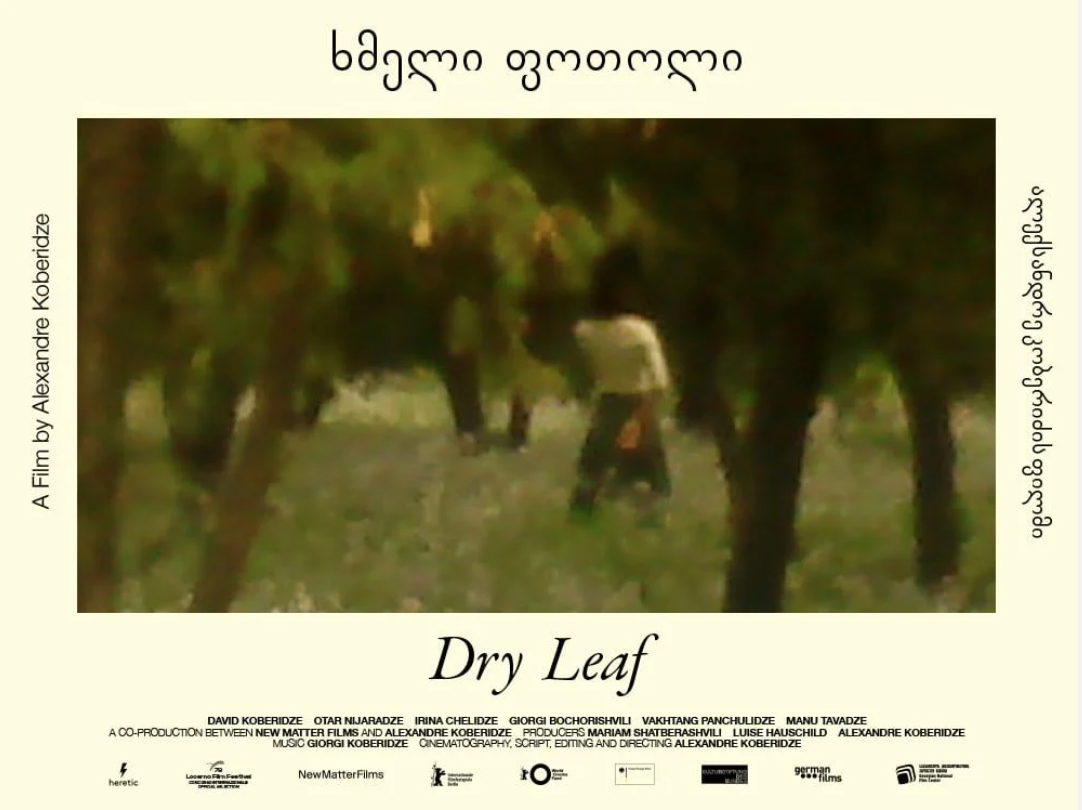
“I wonder who that woman was,” the narrator asks.
I wonder who the woman in the Mexico City cathedral was. I wonder who left these strings of beads in my path tonight, I thought—or perhaps I was not thinking at all, only speaking wordlessly to the beads clenched in my hands.
We Recommend

A Walk in Auschwitz | Salome Kikaleishvili
01.07.2025

Buda and Pest | Photo story of two cities
21.07.2023
Melancholy is everything. Alpha.
20.08.2018