

GEOPROTESTS.ORG | Protest in independent Georgia
Indigo’s new project, “Protest in Independent Georgia,” brings together both large-scale and local protests that occurred in Georgia between 1991 and 2025.
The project captures the 30-year history of civic resistance in independent Georgia from multiple perspectives and voices. Engaging with these narratives provides an alternative perspective on the country’s recent history, highlighting the diverse experiences of social, political, and environmental activism.
GEOPROTESTS.ORG is a digital database of collective memory and civic consciousness, designed to organize the vast and scattered information produced in the heat of protest. The database draws on content from Georgian media sources, including print media, online outlets, television programs, and citizen-generated photo and video materials shared on social media.
Observing these protests, when, why, and for what purpose people mobilize, resembles mapping a national cardiogram. The rhythms and irregularities of civic resistance provide a unique, vivid picture of Georgia’s social and political life.
The project analyzes the anatomy of Georgian protests through key variables: theme, time, location, and form of protest. This framework provides historical context while leaving space for individual insights, research, and discoveries.
A separate variable measures protest outcomes: whether demands were fully met, partially met, or unmet. One of the project’s key discoveries is the emergence of a fourth outcome: “the promise” – when protests end because authorities commit to action in words, even if no immediate action follows.
Key Findings from GEOPROTESTS.ORG
-
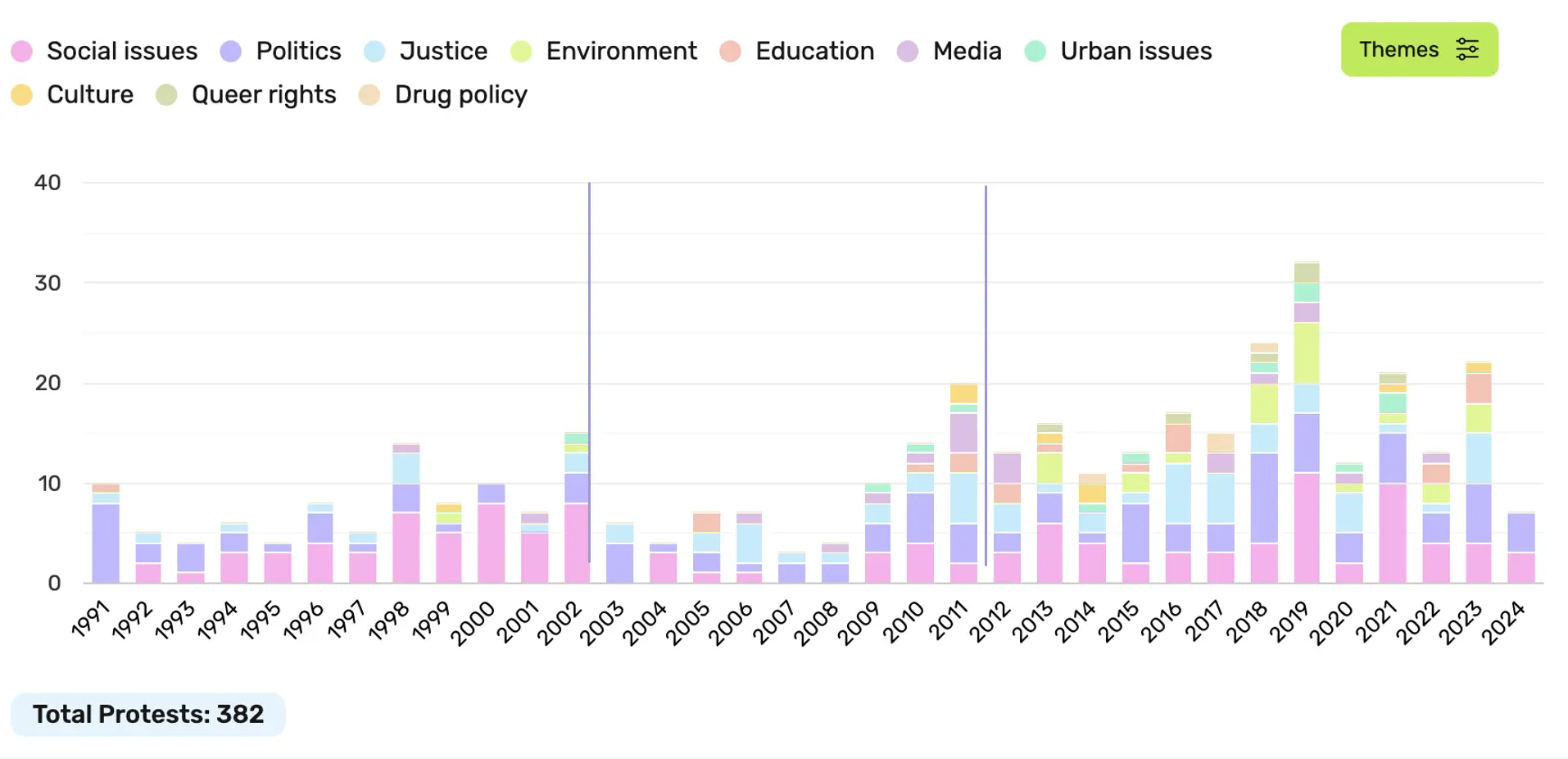
Total protests recorded: 382. Protest frequency often increased after changes in government, notably in 2003 and 2012.
-
2019 is the only exception: That year saw a record 37 protests, including months of continuous demonstrations following the “Gavrilov's Night.” Despite this, the government remained unchanged in 2020, possibly due to COVID-19 restrictions that limited public gatherings and shifted public priorities to health and safety.
-
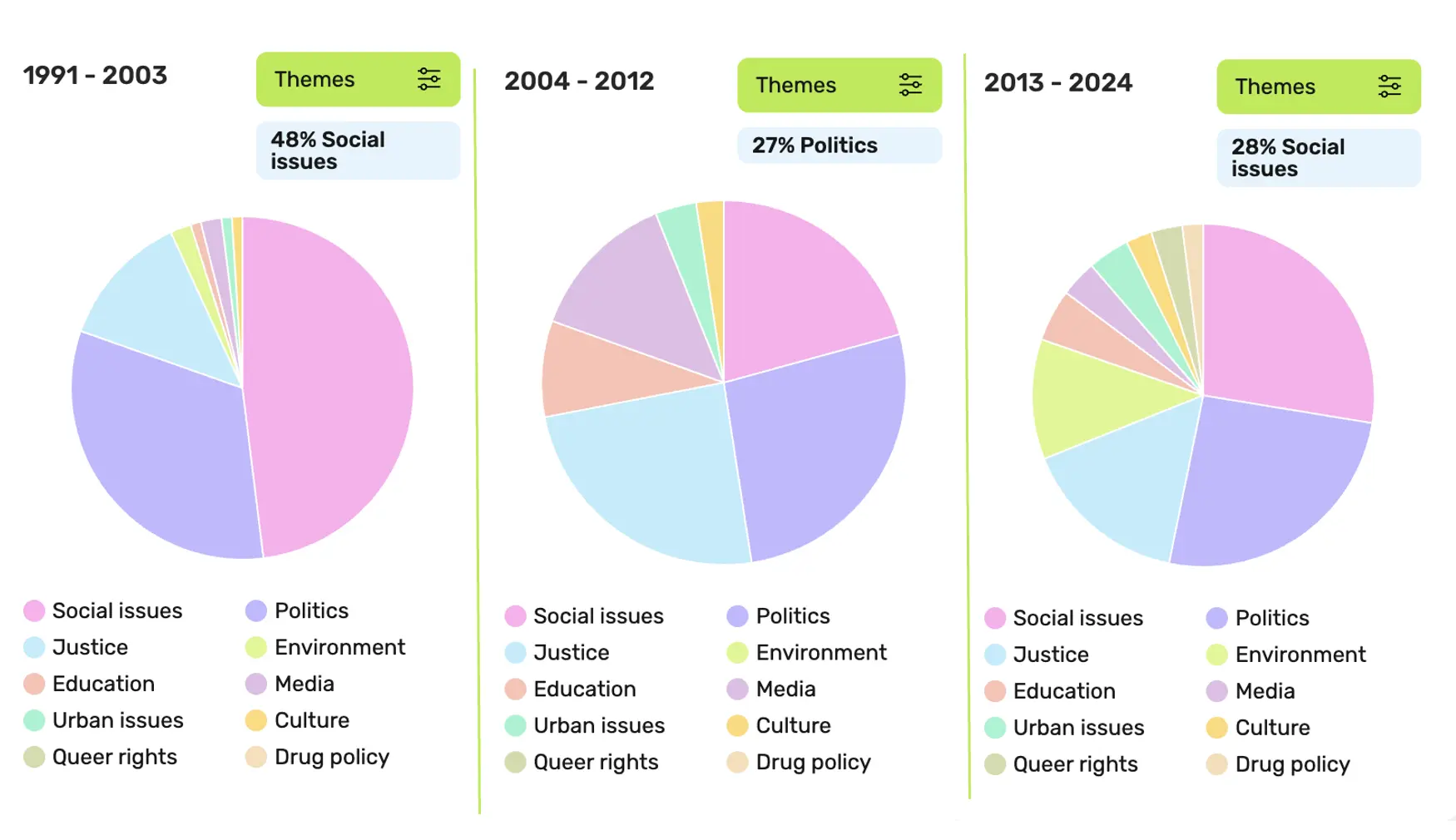
Up to 2004: Social issues dominated (48%), with demands including unpaid wages and pensions, access to food, electricity, and other basic needs.
-
2004–2012: Political issues (27%) and law/human rights (24%) led, with social issues at 21%. Protests related to media independence and journalists’ rights grew to 11%, including notable cases such as the “Photographers’ Case” and “Maestro TV Satellite Antennas.”
-
Protest themes (2013 onward): Themes diversified, with social issues still leading (28%), followed by political issues (25%) and justice /human rights (16%). Environmental issues gained visibility (11%).
Protest Outcomes
-
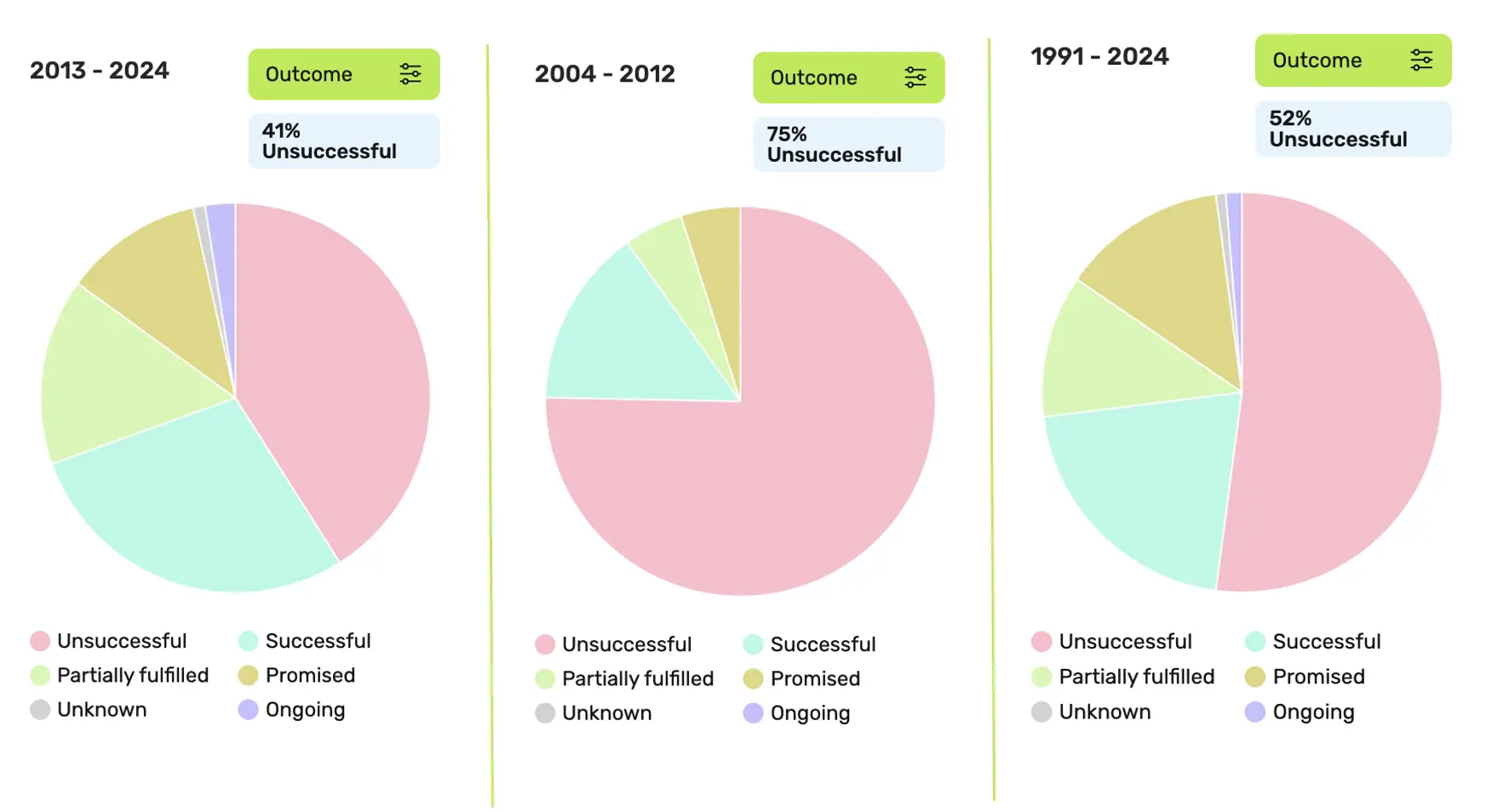
From 1991 to 2024, 52% of protests were unsuccessful (none of the demands met). The rest ended with full or partial satisfaction of demands or after authorities made promises to act.
-
Before 2004: Most protests ended either unsuccessfully (52%) or after participants received promises (24%).
-
2004–2012: The majority (71%) of protests ended with no demands met.
-
Since 2013: Successful protests increased; the share of completely unmet demands fell to 41%, with 44% fully or partially met, and 11.5% ending after promises were made.
Geography of Protests
-
Most protests occurred in Tbilisi (56.6%).
-
23 protests (5%) spread beyond a single city, reaching multiple locations.
-
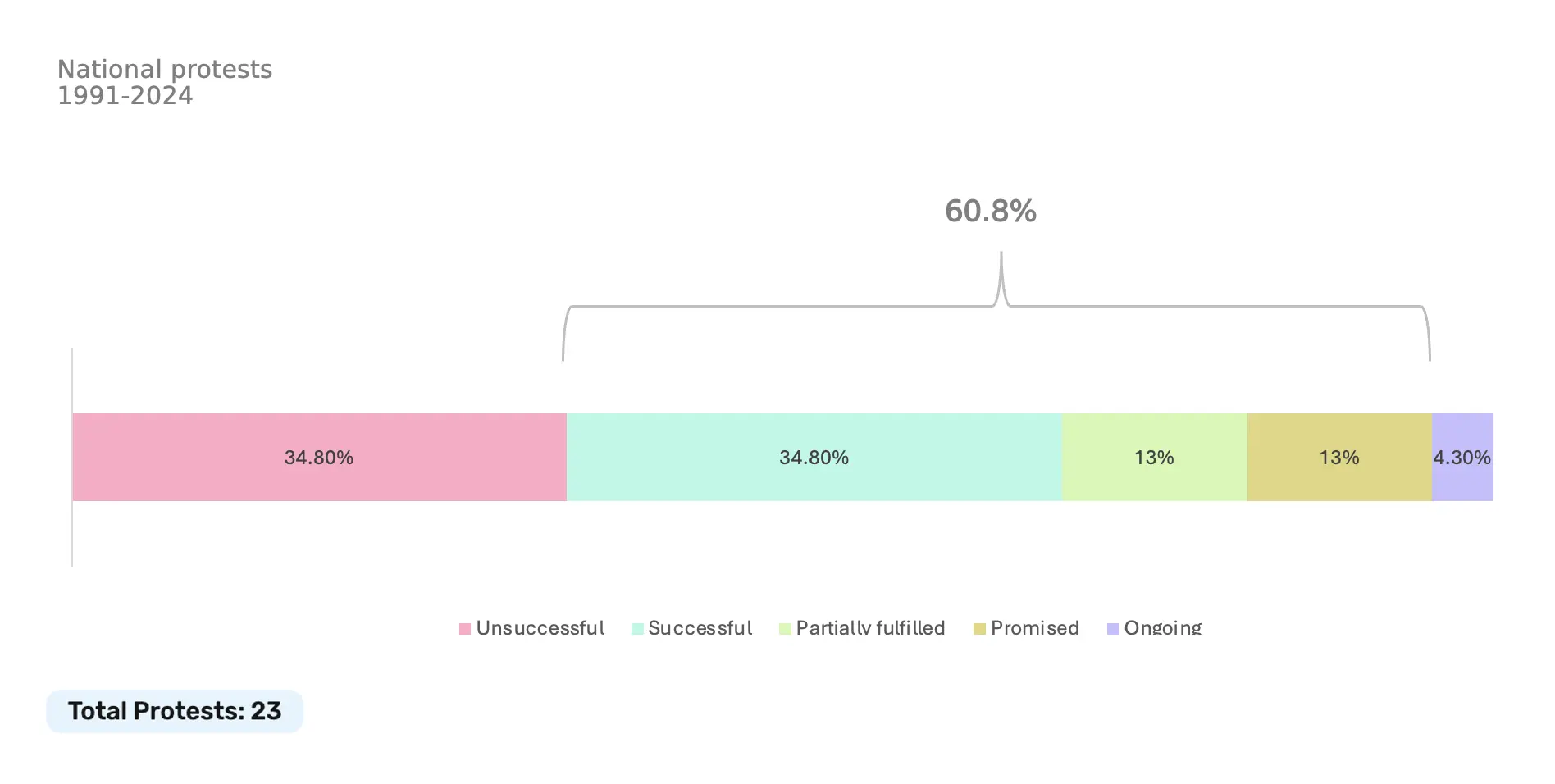
When protests became national, 60% of demands were fully or partially met, or authorities provided promises to fulfill them.