

Enguri here and there | Mariam from Gali
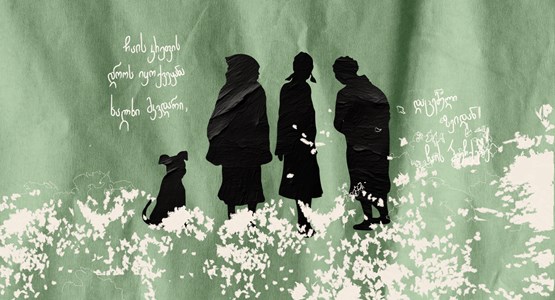
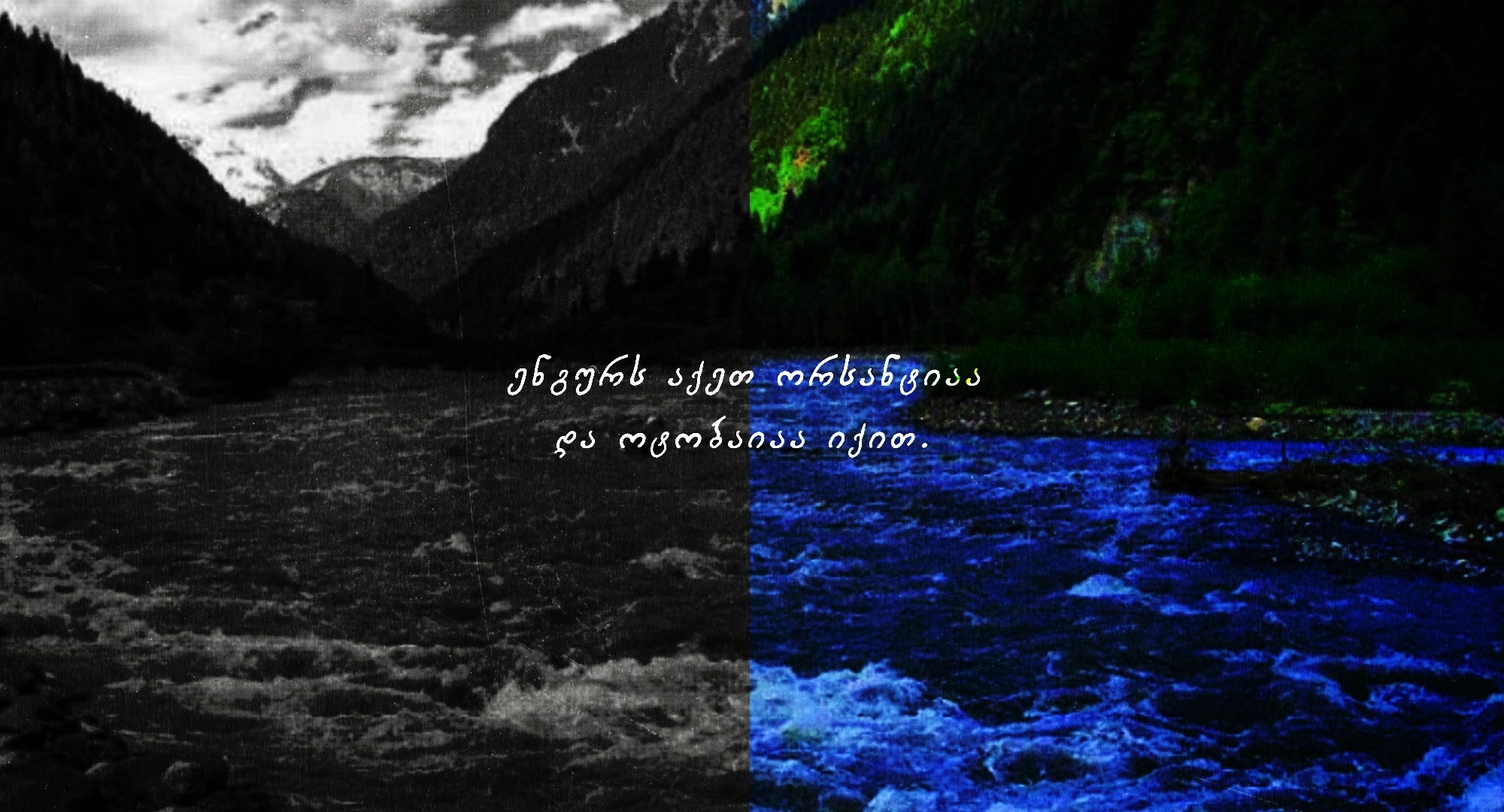
26.09.2025 | 8 Min to readOn this side of the Enguri is Orsantia, and Otobaia is on the other.
Last year, for the first time, I crossed the river alone.
The whole river is lined with barbed wire. The entire border. They’ve put up bases too, with cameras. They’re constantly watching. If someone walks near the river, they assume they’re looking around, waiting for a chance to sneak someone across. There’s money in it for them—they’ll catch you and make you pay.
Last year, I was old enough to understand what I was getting myself into. Before that, I didn’t realize I was living in some kind of madhouse.
My mother crossed through the official crossing, taking my three little ones with her, and that was the better option. If you give them money, they let you through. Almost always.
As for me, in Orsantia, they walked me down to the riverbank and gave me instructions: don’t go left, go right, and keep an eye on the hazelnut grove so that no one comes to check.
You can see everything from over there.
The river itself is a little dangerous too. It’s deep in some places and shallow in others.
I thought I was following the instructions, but somehow I still ended up in a whirlpool.
Where the land ended, the water was swirling, and I almost got pulled under. As soon as I climbed onto the bank, I had to walk through a patch of nettles. The ground was wet, my shoes kept slipping. I grabbed onto the nettle stalks and crawled up that wet slope. I got stung all over, though I only realized it later. My thighs and knees were covered in red marks.
After the slope there’s a small hazelnut grove. As soon as I ran through it, I came across my mother’s cousin. She rushed me into the first house. She let me in and shut the bathroom door behind me.
“Go in, now, and change.”
As soon as I was alone, I heard the sound of a KamAZ outside. So the Russians had just passed by. If they had come ten seconds earlier, they would have caught me right there.
During COVID, crossing back and forth was banned. They weren’t issuing documents either. Even people who had passports found it difficult to travel. And with a document, they only let you through for ten days, or a month. I wanted to stay for the whole summer. So it was worth the risk.
That’s how it is, basically. When I see the Enguri, I know that’s not where the adventure begins—it’s almost where the danger ends. Even if they catch me, so what? If they arrest me, they’ll hold me for a day. We’ll pay the fine and they’ll let me go. So, for us, it’s worth it.
When the river comes into view, I know the house is right there. From our house, there’s first the hazelnut grove, and then the water. It runs right behind us. That’s why I understand my mother. She couldn’t stay on this side. The older I get, the more I understand her.
There used to be Georgian soldiers stationed on this side, and for some reason they made fun of us a lot. I remember their base badly. They spoke to us cynically. The Russians were on the other side. They had something like a green tent set up, and there would usually be three or four guys standing there. If the Abkhaz were there, we knew we had no chance. When it was the Russians, my uncle would tell us, “Come on.”
We used to sneak across the bridge too — I even have photos.
The old bridge was broken, so we had to climb down using iron steps. The river is wide and slow there. Deep, too. I was terrified. We would cross and then ask the Russians to let us through, saying we were going home. Then they would say, “Come on, tell us a poem.”
So I would recite one. They would be happy, laugh a little, and then let us go.
My uncle may have given them money even then, I don’t know. He would wait for us on the other side. Then, little by little, it got more complicated.
Everyone knows from the beginning that once you cross over, you have to sneak back the same way. And they lie in wait for you so they can catch you on the way back and take even more money from you. They find a way to profit from everything.
In the deeper parts of the river, there used to be a boat service. They had inflatable boats. People made money that way too: “Come on, come on, get in quickly, don’t talk.” As if that made any difference. When you’re going down the river in a boat, it doesn’t matter whether you talk or not. If they see you, that’s it.
Last year, on the way back, when I was crossing the river with my mother and my sisters, they sent another ten people along with us. “You already know the way, so take these people across too.”
And suddenly I found myself responsible for people I had never seen in my life. They were speaking Megrelian, and very fast. Everyone was panicking, everyone was scared, and they kept asking me, “Which way now? Which way?”
In general, when you cross the river, the more people there are, the more trouble you have.
We had three children with us. I told them, “Don’t go down there, there’s a whirlpool. Come this way,” pointing them in the right direction. And I looked at my mother, whose face had gone completely white.
The river was probably only knee-deep that time. We choose places like that, where there’s less danger of drowning. I handed the children over to the adults who were already in the water and making their way across.
“Put them there, please. I’ll come back—I still have to bring the others over.”
As soon as I got them across and we entered the hazelnut grove, all my strength suddenly left me. It was as if my legs gave out. My knees were shaking, and I could barely see.
We reached my mother’s aunt’s house and sat down to catch our breath. The children were running around and playing. Once we realized that we were no longer in danger, we started feeling better.
From Orsantia to Zugdidi we drove.
The shock of crossing the river stays with you all the way to Tbilisi. For a while, you keep trembling all over.
This year, I couldn’t risk it anymore. I didn’t cross the river. Not even when my grandfather died and all six of my mother’s siblings gathered together.
...
I was nine or ten when they started putting up barbed wire all along the riverbank. We would sneak across wherever there was still an opening. Sometimes they would carry me on their backs, sometimes they would put me on their shoulders, while the luggage was held up in their hands. When I was very small, they carried the luggage themselves and I would sit on someone’s shoulders.
They would stroke my hair. I loved it. I was going to see my cousins. I knew my best days were waiting for me over there.
My uncle used to take me and my cousins to the river. We would splash around, learn to swim, go fishing. Those were the best days.
Once, my uncle pulled a fish out of the river that was almost as big as me. We were so happy. The three of us children could barely drag it home together.
When I used to go there, it was hazelnut season, which meant the whole family would head out into the hazelnut groves. At most, you’d take some cold water with you—ice-cold. We would go in with sacks and baskets, and when we had collected enough, we would bring everything out by horse and cart.
Toward evening, we would sit in the yard and sort the hazelnuts.
Everyone in the villages along the Enguri has those huge rubber boots, almost like waders.
Camouflage-colored ones.
…
The Enguri is a good river. If you don’t push it too far, it won’t scare you. In our part of Otobaia, there are places where you can swim comfortably. There’s barely any current, and there’s a bank all along it. It’s beautiful. Quiet.
…
I was 16 or 17 when I first saw the Black Sea coast on this side, and I was shocked. There were so many people, both on the shore and in the water, and they had no space of their own.
When I used to go to the river, it was just us, with the whole world around us completely open. It was the same at the sea. There are villages near us, Pichori and Gagida, where locals go to the sea and there’s nothing there—just trees and shells, shells everywhere along the shore.
That is the sea to me.
You can hear the silence.
My aunt would still call out, “Don’t go too far!” And what was the point? If we didn’t go farther, the water only came up to our knees.
The sea was wavy. You practically had to swim all the way to the sun before it got deep.
Seagulls flew overhead.
They were always flying overhead.
…
There was a woman who lived by the river. Her son had died. Everyone in the village treated her with great respect.
She used to come to the Enguri alone, dressed all in black, the hem of her clothes wet up to her ankles, sometimes up to her wrists, and quietly walk into the river.
She would lie back on the water and float. Her black dress would spread out around her. While we ate, went into the water, came back out, and splashed around, the woman would lie there on the Enguri, drifting back and forth with the current.
She wouldn’t move an arm or a leg even once.
She would just stare up at the sky.
We Recommend
Freshly baked bread | Natela from Sokhumi
30.01.2024
The smell of Abkhazia
25.01.2024